When anxiety becomes the third person in bed
Let's be real. Anxiety doesn't politely excuse itself when you're trying to have an orgasm. It shows up uninvited, takes up space, and makes your nervous system forget how to relax. You might feel physically present but mentally somewhere else entirely, running through your to-do list or worrying whether you're taking too long or doing it wrong. That's not a character flaw. That's your brain doing its job too well.
Anxiety around pleasure is wildly common. It looks different for everyone. For some, it's performance anxiety with a partner. For others, it's solo guilt or shame that got installed in your head years ago and never got uninstalled. Sometimes it's just the baseline hum of modern life that makes it impossible to drop into sensation.
Here's what actually happens: anxiety triggers your sympathetic nervous system (fight-or-flight), which constricts blood vessels, tightens the pelvic floor, and shuts down arousal pathways. Your body literally cannot relax enough to feel pleasure while it's in threat mode. This is not something you can logic your way out of.
Why anxiety blocks orgasm (the neurology behind it)
Your brain needs to feel safe to produce the neurochemistry of pleasure. When cortisol and adrenaline are running high, your prefrontal cortex (the thinking part) gets all the blood flow, and the limbic system (the feeling part) goes quiet. You're literally operating from the wrong part of your brain.
This matters because it explains why willpower doesn't work. You can't think yourself into relaxation. You need a tool that bypasses the thinking brain and goes straight to sensation.
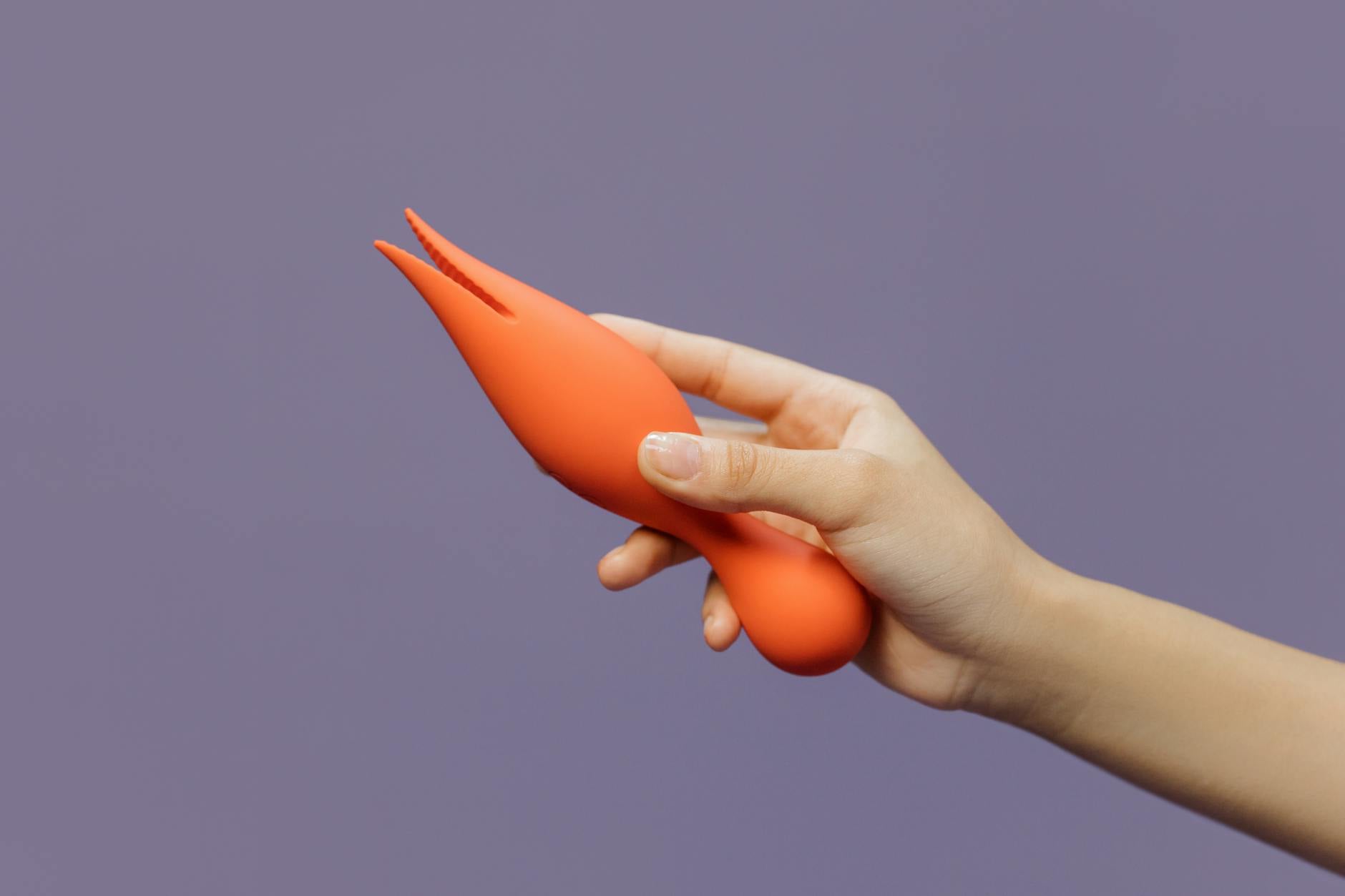
A lemon sucker or lemon clitoral vibrator does something specific here. The consistent, focused stimulation creates a feedback loop that says to your nervous system: this is safe, this feels good, you can focus on the sensation instead of the anxiety. It's not magic. It's just physics and neurology working together.
The specific advantage of a lemon clitoral vibrator for anxious bodies
Traditional vibrators scatter stimulation across a wider area. That diffusion can feel overwhelming when anxiety is already making you hypervigilant. Your nervous system is already processing too much input.
A lemon vibrator concentrates sensation in a smaller, precise area. This narrowed focus actually reduces cognitive load. Instead of your brain trying to process a wide field of sensation plus anxiety plus the feeling that something's wrong, it can concentrate on one thing: the feeling at the contact point.
That's why people with anxiety often say lemon clitoral vibrators feel "grounding." The specificity is a feature, not a limitation.
How to actually use it when anxiety is present
Four tactical shifts that change everything.
1. Start lower, go slower. Your anxiety is already amping you up. Jumping straight to high intensity feels like overstimulation on top of overstimulation. Begin on pattern 1 or 2. Let your nervous system acclimate to sensation before you increase. This takes longer, and that's the point. You're retraining your body to feel safe with pleasure.
2. Use it as your anchor to the present. The moment anxiety starts narrating ("Is this taking too long? Am I doing this right? Did I forget to send that email?"), pause and bring 100 percent of your attention back to the physical sensation. Where exactly does it feel good? What texture are you noticing? This is called sensate focusing, and it's not woo. It works because you literally cannot be anxious about the future and fully present in your body at the same time.
3. Build in permission to stop. Anxiety thrives when you feel trapped. If you tell yourself "I must have an orgasm right now," you've just added performance pressure on top of the existing anxiety. Instead, go in with "I'm going to spend 15 minutes exploring sensation. Orgasm would be great. If it doesn't happen, that's also fine." Remove the outcome requirement. Pleasure is the goal, not the orgasm.
4. Do it when you're already somewhat aroused. Don't use a lemon vibrator as your first move when anxiety is high. Spend a few minutes doing something that already feels safe to you. Some people need music. Some need a fantasy playing in their head. Some need five minutes of touch that doesn't involve the clitoris. Then bring in the lemon clitoral vibrator when your nervous system is already pointed in the right direction.
The role of the pelvic floor in anxiety pleasure
Here's something nobody tells you. When you're anxious, your pelvic floor gets tight. It's part of the freeze response. A tight pelvic floor means less sensation, harder orgasms, and more tension. This becomes a feedback loop that makes the anxiety worse.
A lemon vibrator can actually help here, but only if you're also learning to relax your pelvic floor. When you feel stimulation building, practice releasing the tension instead of gripping. Imagine your pelvic floor as an elevator slowly descending as the vibration increases. This takes practice, but it's the fastest way to shift from anxiety-driven tension to pleasure-driven sensation.
When anxiety needs more than sensation
Let's be clear. A toy is not therapy. If your anxiety around pleasure is rooted in past trauma, in shame programming, or in a relationship dynamic that isn't safe, a lemon vibrator will help with the physical side but not the underlying cause.
If anxiety around pleasure has been present for years, talking to a therapist who specializes in sexual health or somatic work is worth considering. When communication breaks down with your partner around intimacy, that's also a sign that the work extends beyond a tool.
But if your anxiety is situational (new partner, recently stressed period of life, general background noise), a lemon clitoral vibrator combined with these grounding practices can genuinely shift what's possible.
The permission you actually need
Most people with anxiety around pleasure are also the kind of people who are good at pushing through, meeting expectations, and managing everyone else's needs. You're used to overriding your nervous system.
This is the moment to stop doing that. Pleasure requires the opposite. It requires you to listen to what your body actually needs instead of what you think you should be able to do. If sensation is better at lower intensity, that's correct. If you need to stop halfway through, that's fine. If you need to come back to this tomorrow instead of pushing through anxiety right now, that's wise.
Your nervous system isn't broken. It's just trying to keep you safe, even when safety isn't actually the issue. The goal is to retrain it slowly, with a lemon vibrator as a tool that makes pleasure predictable and achievable instead of something fraught with fear.
FAQ: Anxiety and pleasure with lemon vibrators
Is it normal to feel more anxious when I first start using a clitoral vibrator?
Yes. Introducing any new sensation can bump up anxiety briefly, especially if you're someone who's been disconnected from pleasure for a while. Your nervous system is like "wait, what's happening?" That initial spike usually settles within a few sessions. If it doesn't, you might want to try starting even lower on the intensity scale or using it for just 5-10 minutes instead of 20. You're retraining your body to accept pleasure as safe.
Can a lemon vibrator actually help if I have generalized anxiety disorder?
A lemon clitoral vibrator is one tool in a toolkit, not a treatment. If you have diagnosed GAD, using a vibrator mindfully can help with grounding and sensate focus in the moment. But the anxiety itself needs attention through therapy, potentially medication, and lifestyle changes. That said, the sensate focusing practice you do with a lemon sucker builds skills that transfer to other parts of life where you need to be present.
What if I get distracted even with the vibrator?
Distraction is anxiety in another form. Your brain is resisting the vulnerability of pleasure. This is super common. Start with 10-minute sessions instead of 20. Use it at a time when you're less mentally loaded (not right after work stress). Some people find it helpful to focus on counting the vibration pattern or following their breath instead of trying to clear their mind. Distraction doesn't mean you're doing it wrong. It means your nervous system needs more time to feel safe.
Does anxiety around pleasure get worse with age or hormone changes?
Not inherently, but the context shifts. When sensation feels different after hormonal changes, anxiety sometimes appears because you're confused about what's normal. That anxiety is fixable once you understand what's actually happening with your body. Older bodies sometimes have more pleasure capacity, not less, because there's often less performance pressure. The anxiety is usually learned, not biological.
Is it better to use a lemon vibrator alone or with a partner if I have pleasure anxiety?
Start alone, always. When you're working through anxiety, adding another person's presence and expectations makes it exponentially harder. Solo practice with a lemon clitoral vibrator lets you build confidence and retrain your nervous system without an audience. Once you've had some success and feel more solid, then exploring with a partner becomes easier because you already know what works.
How long does it usually take to move past anxiety-related blocks with a vibrator?
It depends on how deep the anxiety goes and how consistently you practice. For situational anxiety, you might feel a shift in 2-3 weeks of regular use. For longer-standing anxiety, count on 2-3 months of patient, mindful practice before pleasure feels genuinely accessible again. The key is consistency and giving yourself permission to go slow.
Moving forward
Anxiety around pleasure isn't a life sentence. It's a signal that your nervous system needs to feel safer. A lemon vibrator, used thoughtfully, can be that permission slip your body needs to remember how to relax into sensation. The real work is teaching yourself to listen to what you actually feel instead of what you think you should feel. Start there, and everything else becomes possible.