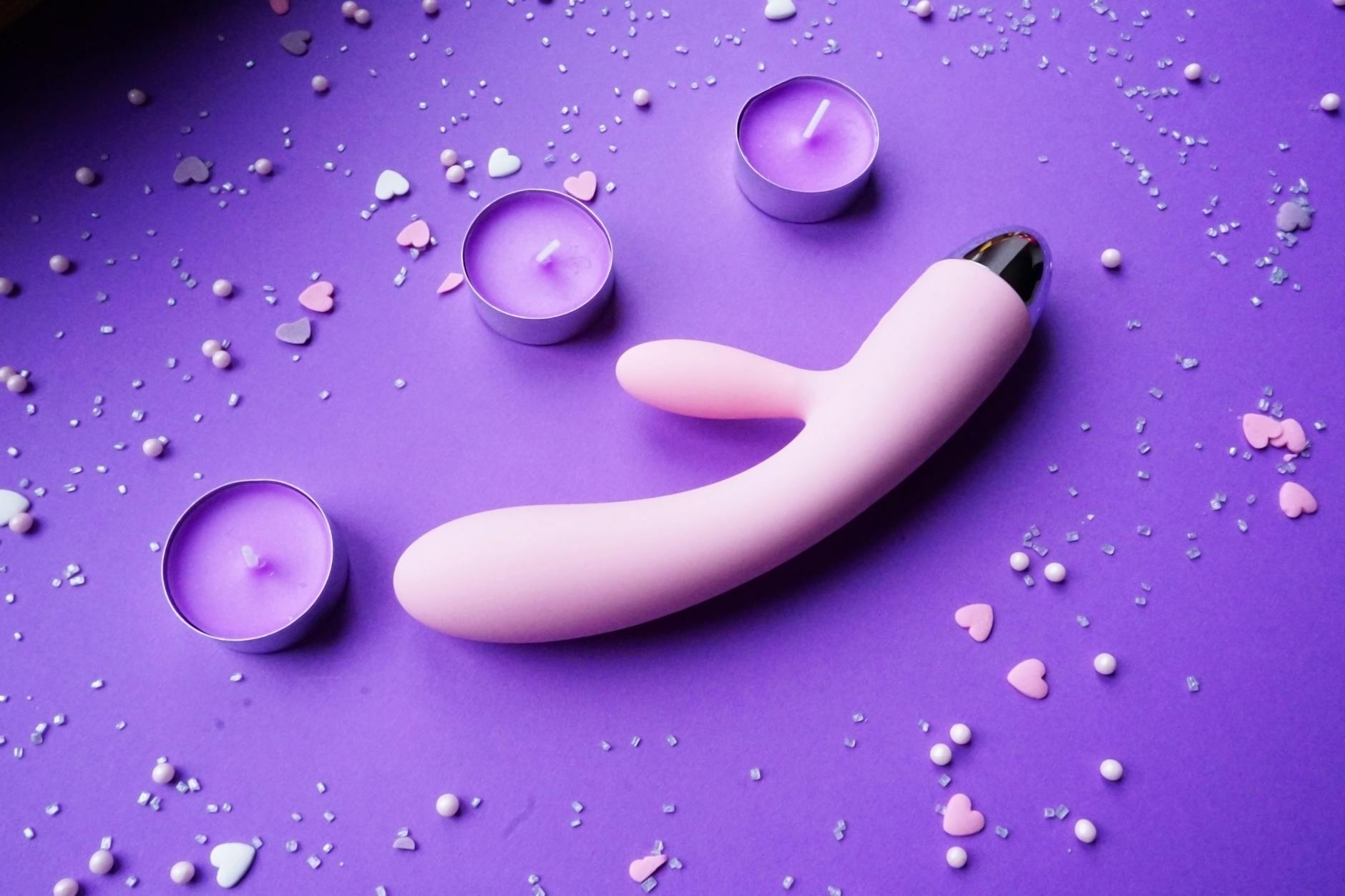
Why Lemon Vibrators Feel Different After Menopause
Let's be real: menopause changes how your body responds to pleasure. It doesn't kill it. That difference matters because most conversations about menopause and lemon vibrators land in one of two unhelpful places. Either "everything stops working" or "nothing changes, you're fine." Neither is true, and both miss what's actually happening.
Here's what shifts physiologically when you're using a lemon vibrator or any clitoral vibrator after menopause, and what stays constant.
What happens to tissue during menopause
Estrogen drops sharply. This isn't just about lubrication, though that's part of it. Declining estrogen makes vaginal and vulvar tissue thinner, less elastic, and slower to swell with blood during arousal. The skin becomes more delicate. Blood flow patterns change. Even the nerve endings behave differently because they're responding to a radically different hormonal environment.
But here's what doesn't shift: the neural pathways for pleasure, clitoral nerve density, or your brain's fundamental capacity for orgasm. Many people report their strongest orgasms arrive after menopause, especially with a tool like a lemon clitoral vibrator.
How sensation changes with a lemon sucker vibrator
A lemon vibrator uses suction rather than traditional vibration. This matters after menopause because suction-based stimulation doesn't rely on tissue thickness the way friction does. You don't need swollen, plump tissue for a lemon vibrator to create intense sensation. In fact, thinner tissue can sometimes mean more direct access to nerve bundles.
What does change: the pattern and speed at which sensation builds. Arousal takes longer. Where you might have felt something immediately at pattern 5 before menopause, now you're warming up at pattern 2 or 3 for 10 to 15 minutes. That's not a loss. It's a recalibration.
Many people describe post-menopausal sensation as more concentrated. Less diffuse, more focused. The experience is different, not diminished.
Why warm-up time matters more now
Your body hasn't forgotten how to respond. It's just operating on a slower timetable. Estrogen decline means blood takes longer to concentrate in genital tissue. This is partly physiological and partly neurological. Your nervous system is also adjusting to lower hormone levels, which affects arousal threshold.
Building in 15 to 25 minutes before using your lemon vibrator isn't a workaround. It's working with your body instead of against it. Rushing sensation rarely works at any age. After menopause, pacing becomes part of pleasure itself.
Here's what I tell clients: start with skin contact, light touch, breathing. Let your mind engage. Use water-based lubricant from the beginning, even if you think you don't need it yet. Then reach for your lemon vibrator once you feel ready. The suction aspect of devices like the Lem vibrator actually responds better when there's time for arousal to develop naturally.
Texture and pressure sensitivity shift
Thinner tissue can mean heightened sensitivity in some areas and decreased tolerance for intense pressure in others. You might find that patterns you loved pre-menopause now feel too strong, especially if applied with firm contact. Lighter touch, pulled slightly away from direct skin contact, often feels better.
This is why starting on lower patterns (1 through 3) with a lemon vibrator matters more after menopause. You're not being careful or cautious. You're reading your nervous system accurately and responding to it. That's actually advanced pleasure.
Some people also notice that sensation feels sharper, more electric. Others feel it as more muted. Both are normal. The key is experimenting without judgment.
The role of lubrication after menopause
Water-based lubricant becomes essential infrastructure, not optional enhancement. Thinner tissue benefits structurally from external lubrication. It reduces friction, protects delicate skin, and actually amplifies sensation because you're not recruiting muscles to create friction. You're freeing them to focus on pleasure.
Apply lubricant generously before you start. Reapply midway through. A lemon clitoral vibrator like the one Hello Nancy makes doesn't require friction to work, so you're not fighting against slickness. You're supporting what your body is doing.
Silicone-based lubes feel richer but can damage silicone toys. Stick to water-based. Your toy (and your body) will thank you.
Mental clarity becomes a pleasure amplifier
The cognitive shift after menopause gets overlooked. Perimenopause and menopause mean hormonal cycling stops. For most of your reproductive life, hormones were cycling in rhythm with your menstrual cycle, creating predictable ebbs and flows in energy, desire, and sensation. That stops.
What emerges on the other side is often a kind of quiet. Mental clarity. Less cognitive load. People who've spent decades managing fertility concerns, cycle tracking, and societal pressure around menstruation often feel liberated. For some, that liberation directly translates to stronger, more focused pleasure.
You're not distracted by whether your body is "performing" in the way it used to. You can actually pay attention.
When sensitivity becomes pain
If sex or masturbation with a lemon vibrator has started causing pain, stop and get evaluated. Genitourinary syndrome of menopause (GSM) is real and common, and it's also highly treatable. Topical estrogen creams, systemic hormone therapy, or vaginal moisturizers can transform the experience in weeks.
Pain isn't a sign that you need to force your body. It's a signal that you need support. A menopause-informed provider can give you options quickly.
Desire changes are separate from sensation changes
Menopause brings a drop in testosterone. Yes, people with vulvas produce testosterone. It's not a small player. Declining testosterone can mean desire takes longer to activate or feels more subtle. This is different from numbness on a lemon vibrator. It's a separate system.
If your desire has disappeared rather than just your sensation shifting, that's worth discussing with a doctor. Testosterone therapy is available and sometimes transformative. Most people respond well to it. But first you have to name the difference between "sensation feels weird" and "I don't actually want this."
Sometimes they're the same problem. Sometimes they're not.
Why lemon vibrators work particularly well after menopause
Air-suction technology doesn't require the kind of sustained swelling that traditional vibration depends on. A lemon vibrator stimulates through negative pressure and suction rather than mechanical vibration. That means your tissue doesn't have to maintain the same level of engorgement. You get intense, sustained stimulation without requiring the physiological setup menopause makes harder to achieve.
It's not that lemon clitoral vibrators are magic. They're just engineered in a way that plays well with post-menopausal bodies. The same technology that works for beginners and people with sensitivity also works for people whose bodies have changed.
The permission that comes after menopause
Between you and me: menopause is when a lot of people finally stop performing and start actually exploring. The pressure to be a certain way sexually softens. You might notice you're less concerned with your partner's rhythm and more interested in what actually feels good to you. That's not a side effect of menopause. That's freedom.
For people in partnerships, that shift can feel like a problem if the partnership hasn't grown with you. It's actually an invitation to reconnect differently. A lemon vibrator becomes a tool for discovering what you actually want, not what you've always done.
FAQ
Does a lemon vibrator feel less intense after menopause?
Intensity is subjective. What often happens is that the type of intensity changes. You might experience sensation as more concentrated and localized rather than diffuse. Orgasms can actually deepen after menopause, even as the ramp-up time extends. A lemon vibrator's suction-based approach often translates to sensation that feels just as powerful, even if the path to get there looks different.
Can I use a lemon vibrator if I have genitourinary syndrome of menopause (GSM)?
Yes, but get treated first. Topical estrogen or vaginal moisturizers typically resolve symptoms within two to four weeks. Once tissue is healthier, a lemon clitoral vibrator becomes much more comfortable. Pain is never a requirement. Treating it first makes everything better.
Why does arousal take longer with a lemon vibrator after menopause?
Estrogen regulates blood flow to genital tissue. As it drops, blood takes longer to concentrate in that area. Your nervous system is also operating under different hormonal conditions. This isn't a malfunction. It's your body operating under new parameters. Building in longer warm-up time works with your physiology instead of fighting it.
Should I use more lubricant with a lemon vibrator after menopause?
Yes. Water-based lubricant is essential infrastructure after menopause, not an optional feature. Thinner tissue benefits from external lubrication structurally and neurologically. Apply generously and reapply as needed. You're not trying to simulate natural lubrication. You're providing active support.
Does hormone therapy affect how a lemon vibrator feels?
Yes. Systemic hormone therapy (HRT) can restore blood flow, tissue thickness, and lubrication, which may change sensation and arousal timing. If you're starting HRT, give yourself a month or two to notice shifts. Topical estrogen creams (which have minimal systemic absorption) tend to work quickly on local sensation. Testosterone therapy typically enhances desire and sensation. All of these can shift how a lemon vibrator feels.
Is it normal for sensation to feel different on different days after menopause?
Completely normal. Even without a menstrual cycle, hormonal fluctuations continue. Stress, sleep, hydration, and movement all affect sensation. You might notice a lemon vibrator feels different depending on the time of day, where you are in your sleep cycle, or how much water you've had. This isn't instability. It's normal variation. Getting to know your own patterns is part of the exploration.
The bottom line
Menopause rewrites the experience of pleasure. It doesn't end it. A lemon vibrator, especially one designed like the Lem vibrator from Hello Nancy, is actually a smart tool for post-menopausal bodies because it works with the physiological changes instead of against them. Longer warm-up, water-based lubricant, starting low and going slow on the patterns, and giving yourself permission to explore without performance pressure. That's the setup that works.
If pain shows up, get support quickly. If desire disappears, talk to a menopause-informed doctor about options. Otherwise, everything you've read about pleasure being "all in your head" is true. Your mind is actually more available now than it used to be. That's not a consolation prize. It's a gift.
Ready to explore what feels good now? Start with a warm-up, grab water-based lubricant, and reach out if you have questions about how to choose the right clitoral vibrator.
Sources
American College of Obstetricians and Gynecologists. (2023). "Genitourinary Syndrome of Menopause." ACOG Practice Bulletin.
Kissling, E. A. (2006). "Capitalizing on the Vaginal Orgasm: The Female Orgasm in American Sexual Thought and Second Wave Feminism." Journal of the History of Sexuality.
Lindau, S. T., et al. (2007). "A Study of Sexuality and Health Among Older Adults in the United States." New England Journal of Medicine.
Palmer, B. J., & Richters, J. (2020). "Orgasm in Sexual Relationships: What We Know and What We Need to Know." Sexual and Relationship Therapy.
Shackelford, T. K., & Goetz, A. T. (2007). "Adaptation to Sperm Competition in Humans." Neuroscience and Biobehavioral Reviews.