
Here's what I hear from couples all the time
"She wants to try something, but I'm worried it means I'm not enough." Or: "He thinks toys mean the relationship is broken." These conversations sit in a lot of bedrooms, usually unspoken, and they kill more potential pleasure than any actual incompatibility ever could.
The thing is, your partner's hesitation probably isn't really about vibrators. It's about what they think vibrators mean.
What partners actually fear (and why they're wrong)
When someone says "I don't want a vibrator," they usually mean one of three things:
1. I think you'll prefer it to me. This is the biggie. The fantasy in their head is you alone with a toy, replaced. What they don't realize is that lemon vibrators and other clitoral toys aren't substitutes. They're additions. Different sensation, different angle, different endpoint. It's like saying your partner replaces you when they get a massage.
2. It feels clinical or disconnected. Wand vibrators, especially the large ones, can feel clunky. They're not sensual. They look like something from a dystopian hospital. A lemon clitoral vibrator, though, is small, elegant, and doesn't scream "medical device." It sits in your hand naturally. It looks like a piece of art.
3. I don't want to feel obsolete. If your partner associates sex with their ability to deliver orgasm through penetration or direct stimulation, a toy that works differently can feel like a threat to their role. It's not rational, but it's real. And you can't shame someone out of feeling threatened. You have to show them a different story.
Why lemon vibrators specifically change the conversation
I've worked with couples for two decades. The pattern is clear. Lemon vibrators and clitoral toys in general are easier entry points than larger vibrators or wand vibrators for a nervous partner. Here's why:
Size matters psychologically. A lemon clitoral vibrator sits in one person's hand. It doesn't dominate the space. It doesn't look like the central character in the scene. It looks like a tool you're using together, not a replacement for intimacy.
The design is intentional. Lemon sexual toys are built for suction and precision stimulation, not broad vibration across the whole vulva. This is actually a feature your partner will appreciate. The lemon vibrator doesn't do what your partner does. It does something different and complementary. It's collaborative, not competitive.
It's easy to pause and connect. Unlike some vibrators that demand constant use, a lemon clitoral vibrator responds to you turning it on or off. Your partner can watch, participate, adjust. They're not sitting on the sidelines waiting for a machine to finish a job. They're integrated into the moment.
The sensory quality is less threatening. Wand vibrators are intense and they announce themselves. A lemon clitoral vibrator is quieter, more precise, more intimate in feel. It's not about overpowering sensation. It's about finding the right angle and pressure. That's a different energy entirely.
How to introduce a lemon vibrator without creating defensiveness
Timing and framing matter more than the toy itself.
Have the conversation outside the bedroom. Not during foreplay, not right before sex, not after a disappointing session. Over coffee or on a walk. Neutral territory. The message isn't "we have a problem." The message is "I want to explore something together."
Lead with curiosity, not criticism. "I've been reading about how different sensations work, and I'm curious" lands differently than "I need more than what we're doing." The first is investigative. The second is evaluative. One invites participation. The other triggers defense.
Frame it as collaboration, not instruction. "I want to try something together and see what happens" is better than "I want you to use this on me." You're not asking them to perform. You're inviting them into an experiment where you're both learning.
Start with the toy in your own hands. Many nervous partners get curious when they see their partner enjoying something visibly. If you use the lemon clitoral vibrator on yourself first (in front of them, with permission and comfort on both sides), you're showing them what it actually is. Not a replacement. Not a criticism. Just a different input that feels good.
Use it during partnered sex, not instead of it. The fastest way to convince a nervous partner that a toy enhances rather than replaces is to integrate it into sex you're already having together. Not as the whole event. As part of the foreplay, or as support during penetration. The toy becomes a supporting actor, not the main character.
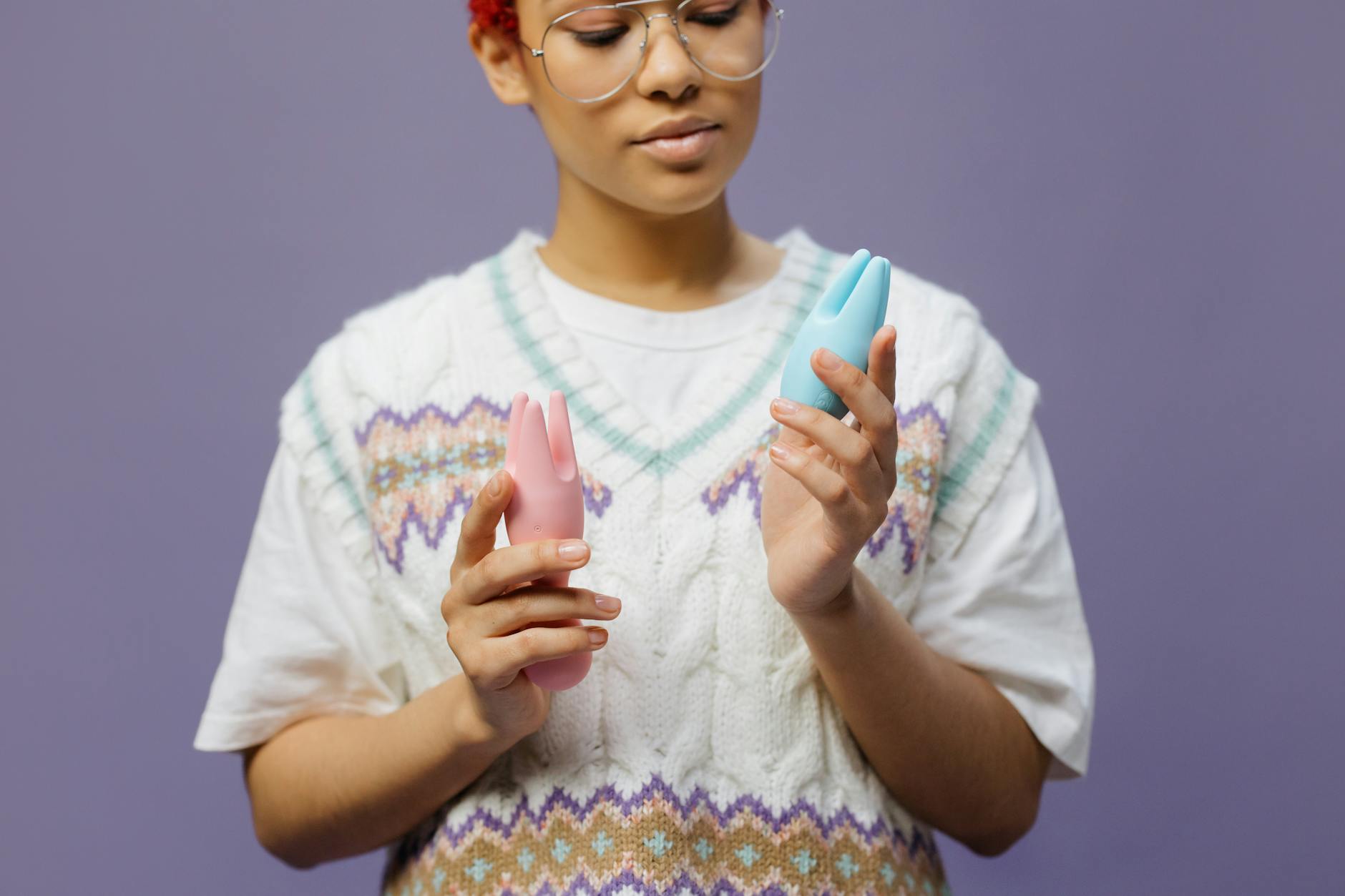
Photo by cottonbro studio on Pexels
What changes when you actually do it
Here's what I've seen happen repeatedly. A nervous partner agrees to try a lemon vibrator. They expect to feel replaced or inadequate. Instead, what they usually experience is:
Relief. The pressure to manually produce an orgasm every single time lifts. Your partner realizes that pleasure isn't a performance metric they're graded on. It's a shared experience. That weight comes off their shoulders in real time.
Intimacy increases. Because there's less pressure, there's more space for connection. Sex stops being about achieving an outcome and starts being about presence. That's paradoxical but true. The toy actually brings you closer.
Curiosity replaces fear. Once the first time is done, the unknown dissolves. Your partner sees that the lemon vibrator doesn't take over. It doesn't replace them. It's just there. And interest often follows. "What if we tried it differently?" becomes a question instead of a threat.
They often want to use it. And here's the plot twist that happens more than you'd expect. A partner who was hesitant about the toy finds themselves wanting to hold it, control it, explore it together. Because they're no longer defending against a perceived threat, they can actually be curious. And clitoral vibrators like the lemon are easy to use. There's no learning curve. It's intuitive.
The real reason this works
Lemon clitoral vibrators work for nervous partners because they're small enough, simple enough, and intentional enough to be integrated without making anyone feel replaced or diminished. They don't do what your partner does. They add something different.
But more importantly, they create a framework for a conversation that's been impossible. "What does pleasure look like for both of us?" becomes answerable instead of defensive. And that conversation, more than the toy itself, is what changes things.
People also ask
Will using a vibrator make my partner feel inadequate?
Not if you frame it as addition, not replacement. Most partners' hesitation isn't about you wanting more pleasure. It's about fear that pleasure from a toy means they're failing. When you integrate a lemon vibrator into sex you're having together, it usually becomes clear quickly that toys do something different, not better. Your partner's hands, your partner's attention, your partner's presence are irreplaceable. The vibrator is just offering a different sensation. That shift from threat to tool changes everything.
What makes lemon vibrators less intimidating than wand vibrators?
Size, design, and sound all matter. A lemon clitoral vibrator is small enough to hold in one hand. It's quiet. It doesn't demand the whole stage. A wand vibrator is larger, louder, and visually dominates. For a nervous partner, that visibility can amplify the anxiety. A lemon vibrator looks like something you're using, not like something using you. The psychological difference is huge.
How do I know when my partner is actually on board versus just agreeing to please me?
Watch for curiosity. When someone genuinely feels unsafe or resentful, they go quiet or compliant. When they're actually interested, they ask questions. "How does it feel?" "Can I try?" "What setting is that?" Those questions mean they've moved from fear to curiosity. That's your green light that it's becoming real instead of obligatory.
Can we use a lemon vibrator if we have a good sex life already?
Absolutely. In fact, couples with solid foundations often integrate toys most easily. You're not using a vibrator to fix anything. You're using it to expand. That's a different energy. You're not desperate. You're curious. And that curiosity is often what your partner needs to feel safe. You're exploring, not problem-solving.
What if my partner refuses to even discuss toys?
Then the conversation isn't really about the toy. Something deeper is happening. Maybe they feel insecure about their body or their role. Maybe they associate toys with infidelity or disconnection in their family of origin. If a lemon vibrator becomes a dealbreaker topic, the actual issue is usually something that needs a larger conversation. A couples therapist or sex therapist can help you access that conversation without the toy becoming the proxy fight.
How do I introduce a toy without making it seem like I've been thinking about this behind their back?
Honesty and timing. "I read something about how different people respond to different sensations, and I got curious" is honest. You're not saying you've been fantasizing for months. You're saying you came across something and thought it might be interesting together. Frame it as something that just occurred to you, not something you've been plotting. Nervous partners often calm down when the origin story feels spontaneous rather than premeditated.
The bottom line
Your partner's hesitation about toys isn't usually about vibrators. It's about fear of replacement, feeling obsolete, or worry that good sex isn't good enough. A lemon clitoral vibrator, with its thoughtful design and intimate scale, can actually help dissolve those fears instead of intensifying them.
The toy isn't the story. The story is about expanding pleasure together instead of you going somewhere they can't follow. That story makes almost everyone less nervous. It makes them curious. And curiosity is where connection lives.
Ready to explore? Start with the conversation, not the toy. The toy is just permission to say things you've both been thinking. Once you say them, the lemon vibrator becomes easy. It becomes collaborative. It becomes theirs too.
If you want personalized guidance on navigating this with your specific relationship dynamic, we're here to help. Get in touch and let's talk about what might work for you both.