When stress colonizes your nervous system
Let's be real. Long-term stress doesn't just live in your shoulders or your jaw. It hijacks your entire sensory system, and that includes pleasure. The nervous system can't tell the difference between "I'm worried about my mortgage" and "someone is touching me." Both trigger the same protective shutdown.
That's why so many people describe sensation as unpredictable during or after high-stress periods. Sometimes you feel everything. Sometimes you feel nothing. Sometimes you feel something, then it vanishes mid-experience.
How stress literally dampens sensation
When you're chronically stressed, your nervous system lives in sympathetic overdrive (that's fight-or-flight mode). Pleasure requires the parasympathetic nervous system, the opposite state. Your body physically cannot access deep sensation when it's convinced something might attack at any moment.
This isn't weakness. This isn't broken. This is your nervous system doing exactly what it's designed to do.
Three measurable changes happen:
First, your brain reduces blood flow to peripheral nerve endings. Sensation requires good circulation. Second, your cortisol and adrenaline suppress dopamine, the neurotransmitter that makes pleasure feel like pleasure. You can have sensation without it feeling rewarding. Third, the pelvic floor tightens. Chronic tension there directly mutes clitoral sensation and can make arousal feel physically impossible.
Why lemon vibrators work better than willpower here
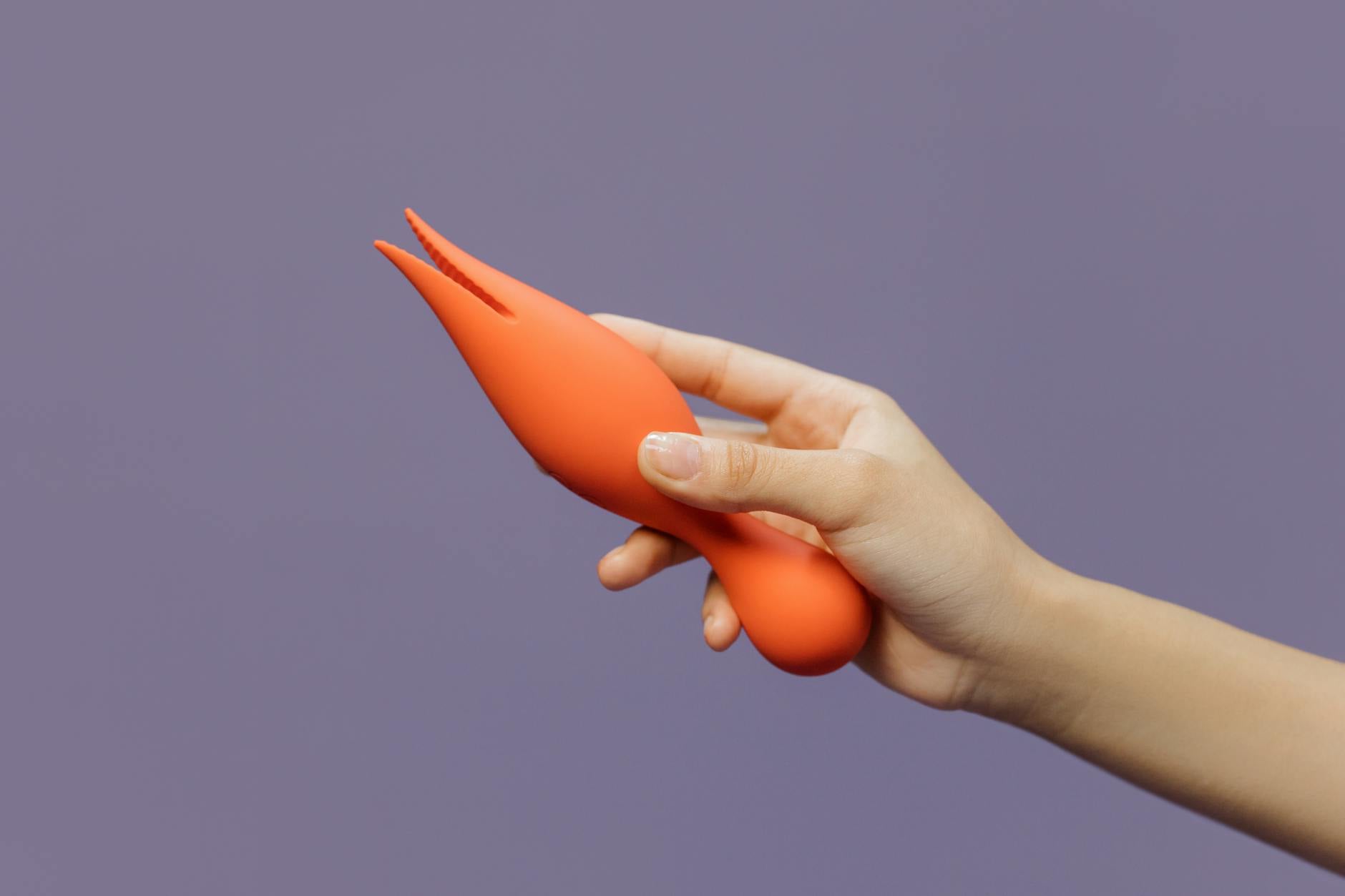
Clitoral vibrators, especially suction-based ones like the Lem, work differently than standard friction toys. They bypass some of the conscious, thinking parts of your brain that stress has occupied. This matters.
Suction stimulation activates the pudendal nerve in a pattern that the nervous system recognizes as "safe." It's rhythmic, predictable, and concentrated. Unlike penetration or broad friction, there's no unexpected sensation or shift in pressure. That consistency is what teaches a stressed nervous system to relax and re-engage.
You're not fighting stress with willpower. You're giving your body a repeatable, gentle way to practice accessing pleasure again.
Starting when sensation feels broken
The first rule: set zero expectations about what you'll feel. Seriously. This is the opposite of performance pressure, which is probably part of why you're stressed in the first place.
Choose a time when you have genuine privacy and at least 45 minutes of uninterrupted space. Stress research shows that the nervous system needs roughly 20 minutes of safety signals before it even considers shifting out of protective mode. Rushing ruins this.
Start with your clothes on. Hold the lemon vibrator against the outside of your underwear at the lowest setting. You're not trying to come. You're not trying to feel anything in particular. You're introducing your nervous system to the rhythm in a low-stakes way. Many people report that the first time they feel nothing at all. That's completely normal and completely fine.
Spend 10 to 15 minutes just letting your body register the sensation without judgment. Then stop. This is the hardest part because your brain wants to know if it "worked." It didn't work or not-work. It just happened.
Building back gradually
Return to this over several days, same time, same setting, same approach. You're not escalating. You're building a pattern of safety.
After three or four sessions, you might try moving the vibrator over underwear with slightly more pressure, still at the lowest setting. Still no expectation of arousal. Still no timer. The goal is sensation, not climax.
Here's what often happens around session five or six: your body starts to recognize the pattern as safe, and sensation begins returning. Not all at once. In waves. You might feel a spark, then nothing, then a spark again. That unpredictability you were worried about actually gets better as you repeat the experience.
Remember that how lemon vibrators work differently when sensation changes after menopause involves similar nervous system recalibration. Stress-related sensation loss uses the same rewiring toolkit.
The partner conversation if you have one
If you're in a relationship, this is worth explaining in advance. "I'm working on reconnecting with sensation. I'm going to spend time alone with a vibrator specifically for that, and it's not about anything you're doing or not doing."
That sentence prevents about 80 percent of the defensive spirals that happen when one person suddenly brings a toy into the picture. Your partner isn't losing anything. You're gaining back something stress took.
Meanwhile, if your partner wants to be part of reconnection, how to use a lemon vibrator during partner sex for shared pleasure walks through that approach. But solo practice first is genuinely the strongest foundation.
Moving to direct contact
Once you're getting consistent sensation through underwear, you can experiment with direct clitoral contact. Water-based lubricant helps, even though your body might be producing plenty. It smooths the experience and removes the friction-discomfort variable that stressed nervous systems often misinterpret as danger.
Start at setting one or two. The Lem's intensity dial exists because gentle matters when you're rebuilding. Most people assume they want the strongest setting immediately. When sensation is fragile, gentler settings actually create faster progress because there's less nervous-system defensiveness to overcome.
You might find that sensation feels better at unexpected times of day. Morning sometimes beats evening for stressed people because the nervous system has decompressed overnight. If that's you, lean into it. You're not broken for having specific conditions.
What to expect over weeks
By week two or three, arousal usually starts showing up again. Not always, not every session, but increasingly. The surprise isn't that you suddenly feel amazing. The surprise is that sensation becomes reliable again. That's the real win when stress has made everything unpredictable.
Some people report that their best sensation comes when they're actively trying not to have it, while watching TV or listening to music, with zero pressure. That's your nervous system saying "I'm relaxed now." Follow that signal.
Sensation often becomes fuller and more interesting than it was before stress hit. This isn't magical thinking. It's because you've spent weeks in conscious, intentional practice. You've retrained your nervous system's association with pleasure from "I should be enjoying this" to "my body is actually safe right now."
When to check in with a pro
If after four or five weeks of consistent practice, sensation still feels completely absent or pain shows up, reach out to a therapist who specializes in somatic work or sex therapy. Sometimes stress triggers patterns that need professional support to unwind.
Similarly, if the unpredictability is matched with persistently low desire, anxiety, or intrusive thoughts, a therapist can help address the stress root, not just the symptom. A good lemon vibrator is a tool for sensation reconnection. It's not a replacement for treating the stress itself.
The longer game
After you've rebuilt sensation and things feel stable again, you might notice pleasure stays more accessible if you keep returning to this practice regularly. Not obsessively. Just weekly or bi-weekly solo time that reminds your nervous system that pleasure is still available.
This becomes part of your personal maintenance. You're not broken or dependent. You're doing what dancers and athletes do: showing up to practice to keep the skill sharp.
Stress will come back because life is like that. But because you've proved to yourself that sensation can return, and that you know the steps to rebuild it, the next time it's less terrifying.
People also ask
Why does stress specifically affect clitoral sensation more than other pleasure?
Your clitoris depends on parasympathetic nervous system activation to engorge with blood. Stress flips the switch to sympathetic mode, which pulls blood toward large muscle groups. It's a survival mechanism. The clitoris is first to shut down because it's not needed for fight or flight. Combined with elevated cortisol suppressing dopamine, the result is specifically flattened sensation in the area that needs it most.
Can you use a lemon vibrator every day while rebuilding sensation?
Yes, if it feels good. Some people find daily solo practice accelerates the nervous-system reset. Others need a day or two between sessions to let their body integrate the signals. There's no magic frequency. The real rule is consistency, whatever pace that looks like for you.
Does using a clitoral vibrator make it harder to feel sensation without one?
Not for most people. This is a common fear. Research on air-suction stimulation shows that regular users don't lose sensation elsewhere. If anything, consistent pleasure practice tends to enhance overall sensitivity as the nervous system relaxes globally.
What's the difference between stress-related sensation loss and actual nerve damage?
Stress flattens sensation gradually and unevenly. Sensation comes and goes, improves with relaxation, responds to the Lem or other stimulation. Nerve damage typically affects a specific area consistently and doesn't improve with stress reduction or different types of touch. If you're unsure, a gynecologist can help clarify.
How long until sensation feels "normal" again?
Two to four weeks of consistent practice is the typical range for stress-related cases. Some people feel marked improvement in days. Others need six weeks. The unpredictability itself usually settles first. Full sensation return comes next.
Should I use the lemon vibrator differently if I'm also in therapy for stress?
Actually, yes. If you're working through stress with a therapist, they might suggest timing or approaches that complement your therapy work. Some therapists recommend pairing vibrator use with grounding techniques. Others suggest keeping them separate. Ask your therapist. They know your stress profile.
Your body knows how to feel again
Sensation that stress stole can absolutely come back. It's not permanent. You're not broken. Your body is just temporarily in protection mode, and that mode can be gradually reset with patience, privacy, and the right kind of gentle stimulation.
If you're ready to start, privacy and patience are your only real requirements. The rest follows. Reach out to Lems Nancy Shop if you have questions about getting started, or check out our buying guide for finding the right clitoral vibrator for your body.