
Let's talk about the mismatch nobody mentions
One of you wants more intensity. The other wants to slow down. A vibrator sits in the nightstand, too strong for one person, not quite what the other needs. Neither of you reaches for it. Sound familiar?
Here's the thing: a lemon clitoral vibrator is actually the bridge toy for this exact dynamic. It's built for range. And if you know how to use it, it works beautifully for partners with different pleasure thresholds.
Why gentler partners often feel dismissed
There's a cultural assumption that vibrators exist to go fast and hard. Women's magazines talk about "intense orgasms." Sex ed treats vibration like a shortcut to climax. The person who needs softness learns early: your preference is a problem to solve, not a valid form of pleasure.
It's not. Gentle stimulation produces deeper arousal, longer-lasting sensation, and often more satisfying orgasms. It's not a compromise. It's an actual preference.
When one partner prefers gentler sensation, the lemon vibrator's air-suction technology becomes your secret advantage. Unlike traditional vibrators that buzz at one rigid frequency, a lemon sucker works through gentle pressure waves. You can modulate intensity with distance and angle rather than speed alone.
The conversation that changes everything
Before you touch the toy, have this talk.
Not "Are you okay with me using this?" That's transactional. Instead: "I want us both to feel good. What would that actually look like for you?"
Then listen. Ask specifics. Is gentleness about pressure (light vs. firm)? Duration (shorter sessions feel better)? Speed (slower rhythms)? Direction (side-to-side vs. up-and-down)? Emotional pacing (slower arousal, more foreplay)?
The gentler partner usually knows exactly what they need. They've just rarely been asked in a way that felt safe to answer fully. Your job is to make the toy a shared tool, not a device that either person has to defend or apologize for.
Distance and angle are your intensity controls
Here's the practical shift: stop thinking of vibrator intensity as an on-off dial.
With a lemon vibrator, gentleness lives in micro-adjustments.
Distance. Start with the suction opening 1-2 cm away from the clitoris. Let the sensation build through the tissue without direct contact. For a partner who loves soft touch, this indirect stimulation often feels better than traditional vibrators that demand positioning directly over the clitoris.
Angle. Sideways or angled application creates different sensation than straight-on. Try approaching from the side of the clitoris rather than directly on top. This spreads intensity across a wider nerve area and feels gentler overall.
Movement. Slow, deliberate strokes (moving the toy slowly while running a pattern) create rhythm and control. A partner who likes gentleness often prefers that sense of intention over stationary vibration. You're not just turning it on and holding it still. You're moving with purpose.
Pattern. Most lemon clitoral vibrators have 5-10 patterns. For a gentler partner, start on patterns 1-3. These tend to feel less aggressive than the stronger waves on patterns 7-10. You can always build intensity. You can't undo overstimulation quickly.
Building arousal together, at their pace
Gentler partners often need longer warm-up. This is not a bug. It's actually an opportunity.
Allot 20-30 minutes. Start with kissing, touch, connection. Get to half-aroused. Then introduce the lemon vibrator at the lowest pattern, held at distance.
The magic is in the slow build. You're not trying to trigger an orgasm. You're creating a cascade of sensation that deepens over time. At pattern 2, at a distance, with slow movement, intensity feels manageable. After 10 minutes, your partner's arousal deepens. Now pattern 3 with closer contact feels incredible instead of overwhelming.
For partners who like this rhythm, a quicker progression ("let's jump to pattern 5") feels jarring. It breaks the momentum. Honor the pace.
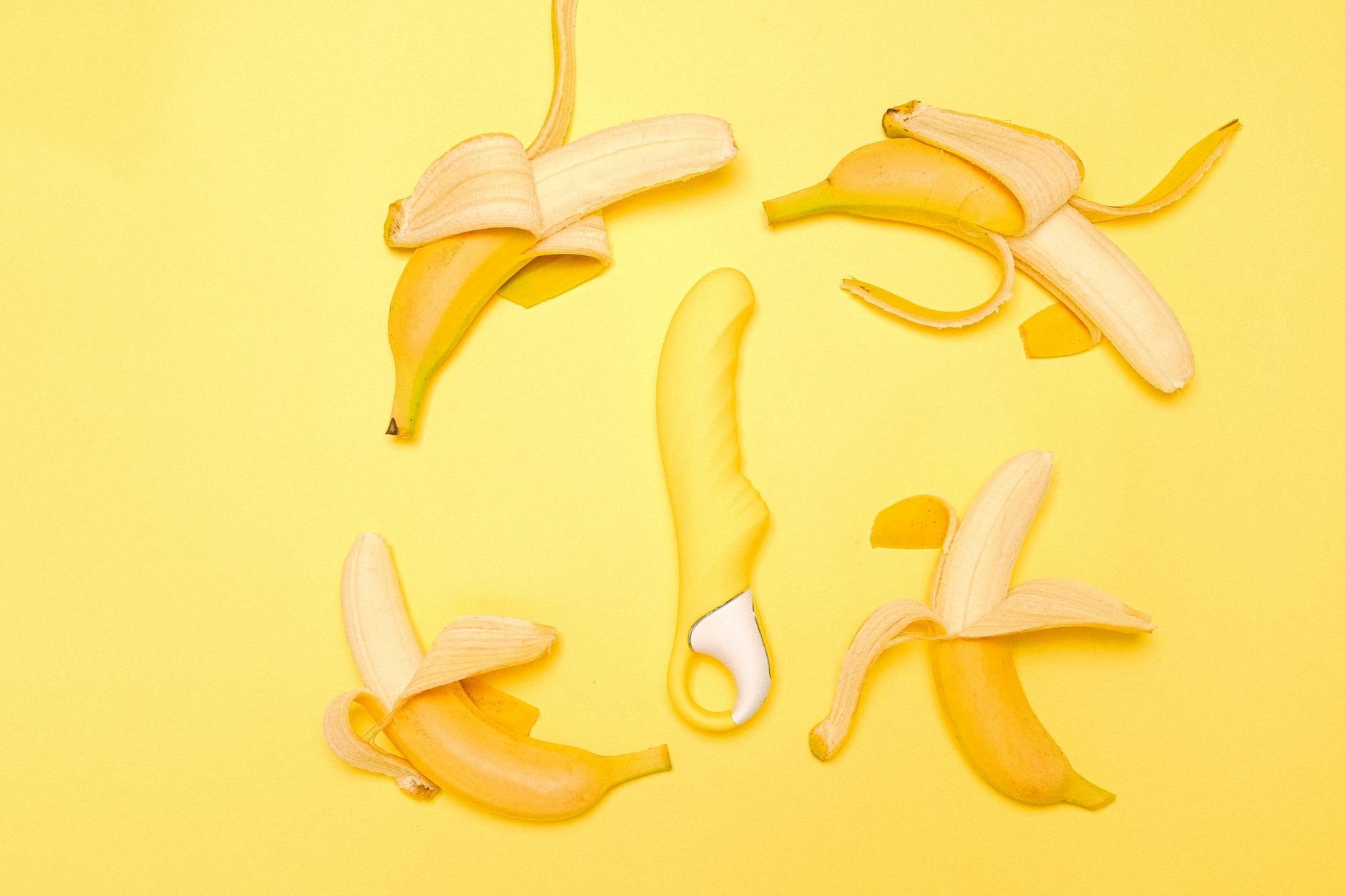
Photo by Anna Shvets on Pexels
Communication during, not just before
None of this works if you're guessing.
Check in. "Does this feel good?" "Softer or about here?" "Want me to slow down?" These aren't mood killers. They're the opposite. A partner who prefers gentleness usually has learned not to ask for what they need. Inviting them to speak up mid-session teaches them that their comfort matters.
Develop a simple signal system if talking feels awkward. Thumbs up means "this is perfect, don't change it." A hand gesture means "a bit softer" or "slower." Many couples find that non-verbal cues feel sexier anyway, and they remove the pressure of having to interrupt the mood with words.
Watch for micro-expressions. If your partner goes quiet and distant, they might be overstimulated, even if they're not saying so. Pull back. Ask. Let them reset.
When your partner is sensitive to overstimulation
Some people's nervous systems hit a ceiling fast. Overstimulation doesn't feel good. It feels numb, irritated, or even painful.
If this is your partner, keep sessions shorter. Fifteen minutes of perfect intensity beats thirty minutes of fighting overstimulation. Use lower patterns. Stop before they ask you to stop. This prevents the spiral where the pleasure zone closes down and nothing feels good anymore.
After an orgasm, ask if they want the toy to stay or go. Some gentler partners want it off immediately. Others want to keep contact but stop the vibration. Neither is wrong. You're learning their architecture.
Combining the lemon vibrator with partnered touch
Here's where it gets interesting: the toy doesn't replace you. It extends you.
Hold the lemon vibrator while your partner is inside you, or while you're touching them manually. Use the toy on your partner while you kiss them. Create a rhythm where you're moving together, toy and hands and bodies in sync.
For gentler partners, this integration matters. The vibrator alone can feel clinical. The vibrator plus your full presence, your attention, your touch on their skin, transforms it into intimacy. You're not outsourcing pleasure to a device. You're using the device as one tool within a larger experience of being together.
What to do if there's still a mismatch
Sometimes you've adjusted everything and intensity is still the sticking point. They want gentler. You want to speed up.
Here's a radical idea: have separate solo-play versions of the lemon vibrator. Or use the same toy, but alternate which of you controls it. When they hold the lemon vibrator on you, they set the pace and intensity. When you hold it on them, you do. This removes the negotiation and gives each person autonomy in the moment.
You might also explore whether the gentleness preference is actually about the toy, or about something else. Does your partner feel safer with slow touch? Do they have a history of painful sex that makes intensity feel threatening? Is gentleness about their body type or nerve sensitivity? These questions matter because they change what you're actually solving for.
FAQ: Partners with different pleasure intensities
Can a lemon vibrator work if one person likes intense sensation and the other doesn't?
Absolutely. Start with distance, angle, and pattern adjustment. The gentler partner gets to experience low intensity. The partner who wants more can always move closer or increase patterns. Many couples find that starting together at gentler settings actually deepens arousal for both people, and the person who prefers intensity gets there faster once the body's arousal is higher.
What if my partner feels emasculated or insecure about preferring gentler touch?
This is usually a conversation about masculinity and sex, not about the vibrator. Reassure them that gentle preference is common, doesn't reflect their desirability, and often produces better orgasms. If they're still struggling, a couple's therapist who specializes in intimacy can help reframe this belief. Their preference is valid, full stop.
Is using a vibrator together cheating on the intimacy somehow?
No. It's an extension of intimacy. You're choosing to explore pleasure together, communicating, and building something shared. That's the opposite of cheating. It's deep partnership.
How do I bring this up if we've never used toys together?
Start small. "I've been thinking about ways to make things even better for both of us. What do you think about exploring together?" Then listen. Don't push. If they're hesitant, ask what would make them feel safe or curious. Many people worry toys mean they're not enough. Naming that fear directly often dissolves it.
What if they never want to use a vibrator, even a gentle one?
Then you don't. But have a conversation about why. Is it about the toy itself, or about vulnerability, or about their beliefs around sex? Understanding the root matters. Sometimes what feels like a "no" to the vibrator is actually a "no" to a bigger conversation that needs to happen first.
My partner enjoys the vibrator but takes a long time to orgasm. Is that normal?
Completely normal, especially with gentler stimulation. Longer arousal sessions often produce more profound orgasms. Stop measuring success by speed. If your partner is enjoying the sensation and progressing toward climax, that's the whole goal. Extended foreplay is a feature, not a bug.
The pleasure payoff
When you use a lemon clitoral vibrator with a partner who prefers gentleness, something shifts. They stop apologizing for their preference. You stop resenting the time it takes. The toy becomes the place where both of your needs converge, not conflict.
Your partner gets to experience pleasure at their own speed. You get to participate in that, to witness it, to build it together. That's intimacy. That's partnership. That's worth the small adjustment in technique and communication.
If you're curious about exploring together and want guidance on selecting the right toy or approach for your specific dynamic, reach out to our team at Lems Nancy Shop. We're here to help you build shared pleasure, whatever that looks like for you.