
When anxiety crashes the party
Let's be real. Anxiety doesn't care that you carved out time for pleasure. It doesn't respect the mood you built or the mental load you dropped. One stray thought about work, a flash of self-consciousness, a memory you didn't ask for, and suddenly arousal evaporates. Your body tenses. Your breathing gets shallow. Your mind splits into the observer watching yourself fail to feel good, which makes it worse.
This is so common that I rarely work with a client who hasn't experienced it. And here's what matters: it's not a personal failure. It's a nervous system doing exactly what it was designed to do. The problem is that same system doesn't know the difference between a genuine threat and performance pressure.
How anxiety actually disrupts pleasure
Your nervous system has two competing modes. Parasympathetic is your rest-and-digest state. That's where arousal lives. Sympathetic is fight-or-flight. When anxiety flips the switch, blood redirects from your genitals to your major muscle groups. Lubrication dries up. Sensation dulls. The clitoris literally withdraws slightly. Your brain stops processing pleasure signals because it's too busy catastrophizing.
This cascade happens so fast you don't even realize what triggered it. You just notice you've gone numb.
Here's where lemon vibrators, especially suction-based clitoral toys like the Lem, become genuinely therapeutic tools rather than just pleasure devices. The intense, focused stimulation cuts through that numbing. It gives your nervous system something undeniable to anchor on.
Why suction vibrators ground you faster than traditional toys
Traditional vibrators create sensation through rhythmic buzzing. That's great, but when your brain is spiraling, it's easy to space out. Suction stimulation is different. The pressure-release cycle creates a pulsing sensation that's harder to ignore. Your body has to respond to it. You can't dissociate as easily.
I recommend lemon clitoral vibrators specifically because they're designed for clitoral nerve density, not internal penetration. When anxiety hits, internal sensations can feel more intrusive than grounding. A focused clitoral toy keeps your attention where you want it.
The setup that actually works
If you know anxiety tends to hijack sex, build in intentional grounding before you even reach for the toy.
Step one: Pick your anchor sensation. This might be a weighted blanket, a texture you love (velvet, linen, ice), or even just the feeling of your feet on the floor. The point is to choose something neutral and grounding before the spiraling starts. Your brain works better when you're not in crisis mode.
Step two: Use breathwork as a reset switch. A 4-7-8 breath (inhale for 4, hold for 7, exhale for 8) signals your nervous system to downshift. Do this before and during if you feel anxiety creeping in. It sounds simple because it is, but it works.
Step three: Start without the toy. Spend 5-10 minutes on sensation that's low-pressure. Touch your inner thighs, your collarbone, your neck. Notice what feels good. The goal is to prove to your nervous system that you're safe and that pleasure is available, not to achieve anything.
Step four: Introduce the lemon vibrator slowly. Begin on the lowest setting. Don't go straight to the clitoris. Start on the inner labia or the mons pubis. Let your body adjust to the sensation. The suction will feel strange at first, but it's that strangeness that sometimes breaks the anxiety loop. You can't spiral about work when your brain is processing something novel.
What to do when anxiety shows up mid-session
You're doing okay, arousal is building, and then boom. A thought lands. Sometimes it's about how you look. Sometimes it's random. Sometimes it's completely senseless.
Don't fight it. Fighting makes it bigger. Instead: pause, place your lemon adult toy down, and identify what just happened. Is it a legitimate concern (I'm worried my partner will come home) or is it an anxiety spiral (I look weird right now, everyone would judge me)? One deserves a practical solution. The other deserves acknowledgment and permission to continue anyway.
Then do one of these:
Ground into the present. Name five things you see, four you can touch, three you hear, two you smell, one you taste. This isn't mystical. It's neurological. It interrupts the anxiety spiral by forcing your prefrontal cortex to work, which tamps down the amygdala's fear response.
Return to breath. Even one full conscious breath interrupts the fight-or-flight response. Repeat if needed.
Change the context slightly. Sometimes moving to a different room, lighting a candle, or playing music is enough to reset. You're not starting over. You're just signaling safety to your nervous system.
Then return to the lemon vibrator if you want to. No shame if you don't.
Building tolerance over time
If anxiety during sex is chronic, you're not going to rewire it in one session. This is a practice. Think of it like exposure therapy, but with pleasure as the goal.
Weekly solo sessions with your lemon clitoral vibrator teach your body that arousal and anxiety don't have to coexist. They're competing states. The more you practice the first, the harder it is to slip into the second. Over time, your nervous system learns the pattern. "Oh, we're doing this. It's safe. I can relax."
If you're in a partnership, this solo work is actually more valuable than partnered sex right now. Your nervous system is learning to trust pleasure without the added variable of another person's presence.
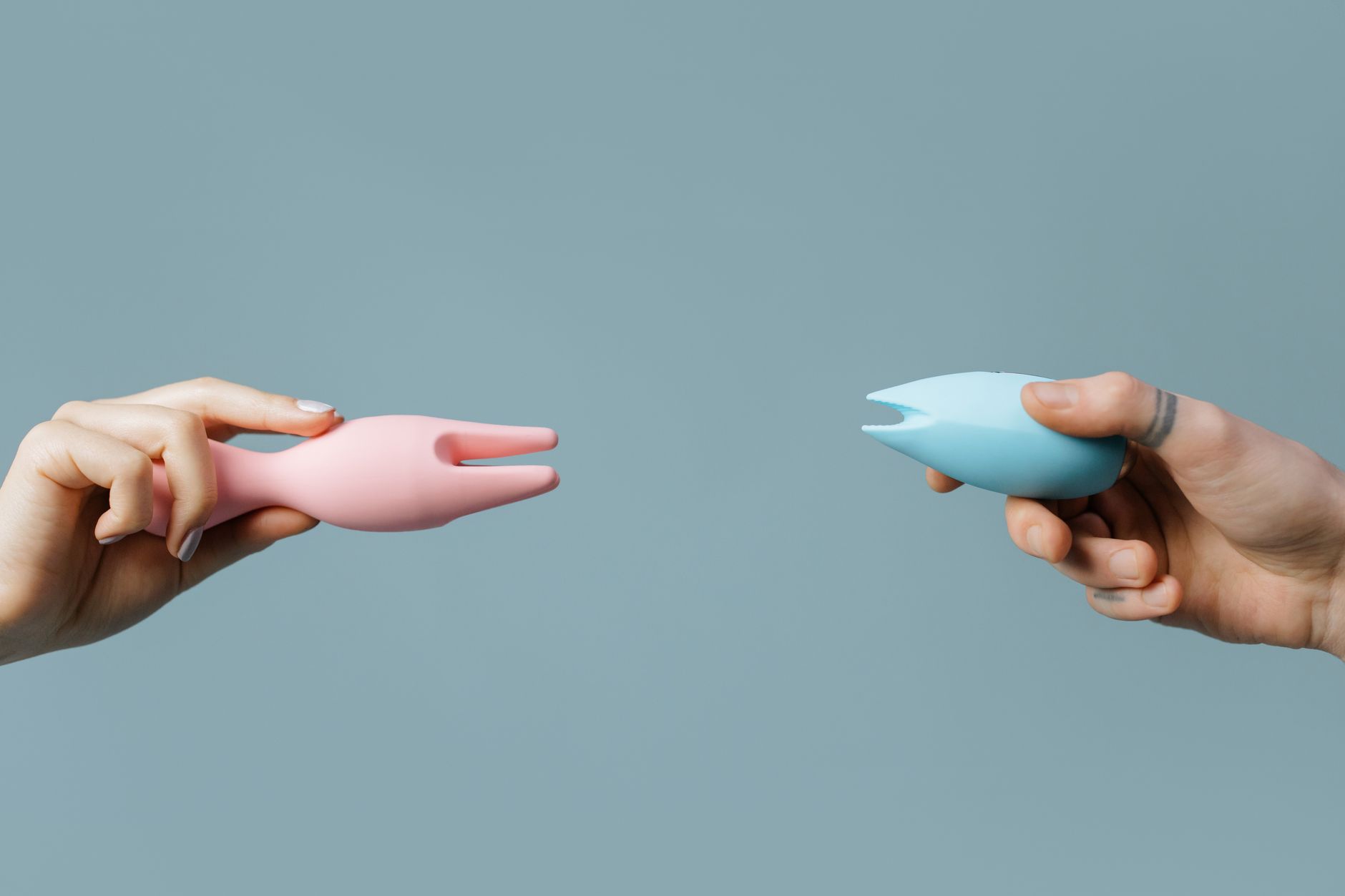
Photo by cottonbro studio on Pexels
When to bring a partner in
Once you've established that you can access pleasure solo without anxiety spiraling, partnered play becomes different. You're not trying to perform. You've already proven arousal is possible. Now your partner's presence is just one more sensation to navigate, not the whole test.
Here's what I tell couples: the partner's job is to be present without pushing. No checking in obsessively ("Are you okay? Are you into this?"), no trying to "fix" the anxiety by being more romantic or more intense. Just being there, respecting your pace, and trusting the lemon vibrator to do what it does.
Some partners feel insecure about toys. They think the vibrator means something's wrong with them. It doesn't. A lemon clitoral vibrator isn't a replacement. It's a tool that makes anxiety-free pleasure possible. Frame it that way.
When anxiety is something bigger
If anxiety during sex is paired with panic attacks, intrusive thoughts about trauma, or if you're struggling to function outside of sex too, talk to a therapist. I'm serious. A good cognitive-behavioral therapist or trauma-informed therapist can help in ways a toy never will. Lemon vibrators are part of the picture, not the whole one.
Sex anxiety that's rooted in past trauma, relationship betrayal, or clinical anxiety disorder needs professional support. Use the tools here. Use your toy. But also get help.
The real shift
The goal isn't to never feel anxiety again. That's not how nervous systems work. The goal is to have pleasure be the default and anxiety be the occasional blip, not the other way around. A lemon clitoral vibrator is one way to practice that shift. It's a concrete, physical reminder that your body can feel good, that sensation can ground you, and that pleasure is something you deserve even when your mind is being difficult.
Your nervous system is trying to protect you. Thank it, and then show it there's nothing to fear.
People also ask
Can lemon vibrators actually help with anxiety, or is that just marketing?
It's not marketing. The science is straightforward: intense genital stimulation activates the parasympathetic nervous system and floods your brain with dopamine and endorphins. These neurochemicals directly oppose anxiety. That said, a lemon clitoral vibrator won't treat clinical anxiety disorder. It's a grounding tool, not a medication. If you have diagnosed anxiety, use the vibrator alongside professional support, not instead of it.
What if I feel more anxious when I use a lemon vibrator?
Some people find any stimulation overwhelming when they're in an anxious state. If that's you, start even slower. Use the lowest setting on your lem vibrator, apply it for just 10-15 seconds, then pause. Increase duration gradually over weeks. You're teaching your nervous system that the sensation is safe. That takes time. If it never feels safe, it's okay to use a different tool. Not every approach works for every person.
Should I tell my partner I use a lemon vibrator to manage anxiety during sex?
That depends on your relationship dynamic and how comfortable you both are with communication. If you're trying to address anxiety during partnered sex, honesty helps. A simple framing: "I get in my head sometimes, and using a lemon clitoral vibrator helps me stay grounded. It's not about you. It's about me having the tools I need." Most partners appreciate directness over silence. If your partner has a strong negative reaction, that's worth exploring with a couples therapist.
How often should I practice with my lemon vibrator if I have anxiety during sex?
Consistency matters more than frequency. Two 15-minute solo sessions per week where you focus on breathing and sensation will do more than a chaotic marathon session. You're retraining your nervous system, and that happens through repetition. Think of it like physical therapy. The small, consistent practice is what creates change.
Is it normal to feel nothing during arousal when anxiety kicks in?
Completely normal. That's called genital dissociation, and it's one of the most common presentations of sex-related anxiety. Your brain literally numbs the sensation as a protection mechanism. A lemon clitoral vibrator can interrupt that numbing because the suction stimulation is so distinct that dissociation becomes harder. But if dissociation is severe or frequent, that's a sign to work with a therapist who specializes in trauma or anxiety.
Can lemon adult toys help if my anxiety is about my partner judging my body?
Partially. A lemon vibrator can help you feel pleasure despite the anxiety, which over time weakens the association between your body and judgment. But the core belief (that your body isn't good enough) usually needs therapy to shift. What lemon sexual toys do is create evidence that pleasure is possible anyway. That evidence matters, and it builds confidence, but it's not a substitute for addressing the underlying insecurity.
The next step
If you're ready to make pleasure a priority over anxiety, a lemon vibrator is genuinely useful. But the real work is the nervous system retraining you do around it. Start small. Build consistency. Be patient with yourself.
Questions about how to use lemon clitoral vibrators or other approaches to anxiety during sex? We're here. Reach out at our contact page, and we'll point you toward resources that fit your situation.