Here's what nobody tells you about this conversation
The moment you decide to bring a clitoral vibrator into a new relationship is usually the moment anxiety goes up, not down. You're not worried the toy won't work. You're worried your partner will think you're rejecting them, or that you're "high-maintenance," or that the whole thing will feel clinical and kill the mood.
None of that has to happen. The introduction of a lemon vibrator or any clitoral vibrator into early intimacy is actually one of the clearest ways to communicate what you need. But the timing and framing matter enormously.
Why the early relationship window is actually ideal
Countintuitively, introducing a toy earlier is often easier than later. Here's why. New relationships haven't yet crystallized into fixed patterns. Your partner hasn't built up a narrative about what sex with you is supposed to look like. There's less performance anxiety on either side. The newness itself is the point.
When you wait until month six or year two, you're asking someone to unlearn a pattern, to second-guess whether something they thought was working actually wasn't, and to absorb the subtext that you've been faking satisfaction or adjusting expectations. None of that is fair to either of you. Introducing the lemon vibrator early says, "This is part of who I am and how I experience pleasure." That's not a complaint. That's information.
The other advantage: early-stage dating is when people are still asking questions. When they're genuinely curious. Once you settle into a rhythm, curiosity often flatlines.
The conversation before anything gets naked
The best time to mention a clitoral vibrator is not during sex or when you're already aroused. It's also not in a text at midnight (kills the mystery, feels transactional). The sweet spot is a low-stakes conversation, ideally in person, when you've both acknowledged you're getting physical soon or moving toward that.
You don't need a formal sit-down. It's a comment, not a contract negotiation. Something like: "I use a lemon vibrator when I'm solo, and honestly, they're way better for me than most things. If we ever get there, I'd want to have one in the mix." That's it.
Notice what that sentence does. It normalizes the toy as something you already own and use. It names a specific benefit (clitoral vibrators are better for your body). It expresses what you want without demanding anything. And it leaves space for them to ask questions or opt out.
What you're NOT doing: apologizing, over-explaining, framing the toy as a fix for something he's doing wrong, or building it up as this huge sexy fantasy. The best introductions are matter-of-fact. Casual. Like you're mentioning you prefer a certain position or have a sensitivity he should know about.
How to read the response
If someone says, "Cool, I've never used one, but I'm game," you're in great shape. They've given you permission and curiosity.
If someone says nothing, or deflects, or changes the subject, that's information too. They might be nervous. They might feel insecure. They might need reassurance that you want them AND the toy, not instead of them. That conversation sounds like: "I'm really into you. I also know my body responds to a certain kind of stimulation, and having that available makes sex better for both of us because I actually finish."
That second sentence is gold. You're not talking about him. You're talking about your own neurology and pleasure. That's specific, honest, and impossible to argue with.
If someone outright says no, that's also information. Some people have deep resistance to toys. It's worth understanding why. Sometimes it's insecurity. Sometimes it's a mismatch in values or priorities. Sometimes it's just a hard boundary. You get to decide if that's workable for you. But this is the moment to know that, not six months in.
The first time you actually use one together
Don't make it a production. You don't need to set the scene, light candles, or act like you're filming something. Just have it nearby when things are getting physical.
A natural entry point is during foreplay, when you're already touching each other. You might say, "Want to try it?" or you might just reach for it. Either way, the first time should feel like an experiment, not a performance.
Practical notes. Use lube if you're using a silicone toy. Start at a lower intensity setting if your lemon vibrator has variable patterns (most do). Let them see how you respond to it. The sexiest thing someone can do is watch you have genuine pleasure. Not performed pleasure. Real pleasure. That's the whole point.
If it's awkward, that's okay too. Most new things are awkward at first. The difference between awkward and bad is whether you can laugh at it and try again.
The insecurity you didn't expect
Some partners get quiet after the first time. They might feel replaced, or worried the toy is more effective than they are, or just flooded with feelings they didn't anticipate. That's real.
The antidote is simple: affection and honesty. After sex, be warm and present. The next time you're talking about sex, you might say something like, "I really loved that you were open to trying that. It makes me feel safer with you that you can hear what I need." You're not defending the toy. You're reinforcing him for being a good partner.
In my experience with couples, the partners who initially felt uncertain about toys often become their biggest enthusiasts once they see how much their partner lights up. Pleasure is contagious. Seeing someone you care about experience real, undeniable pleasure is sexy. It's not diminishing. It's actually the opposite.
Why a lemon vibrator specifically
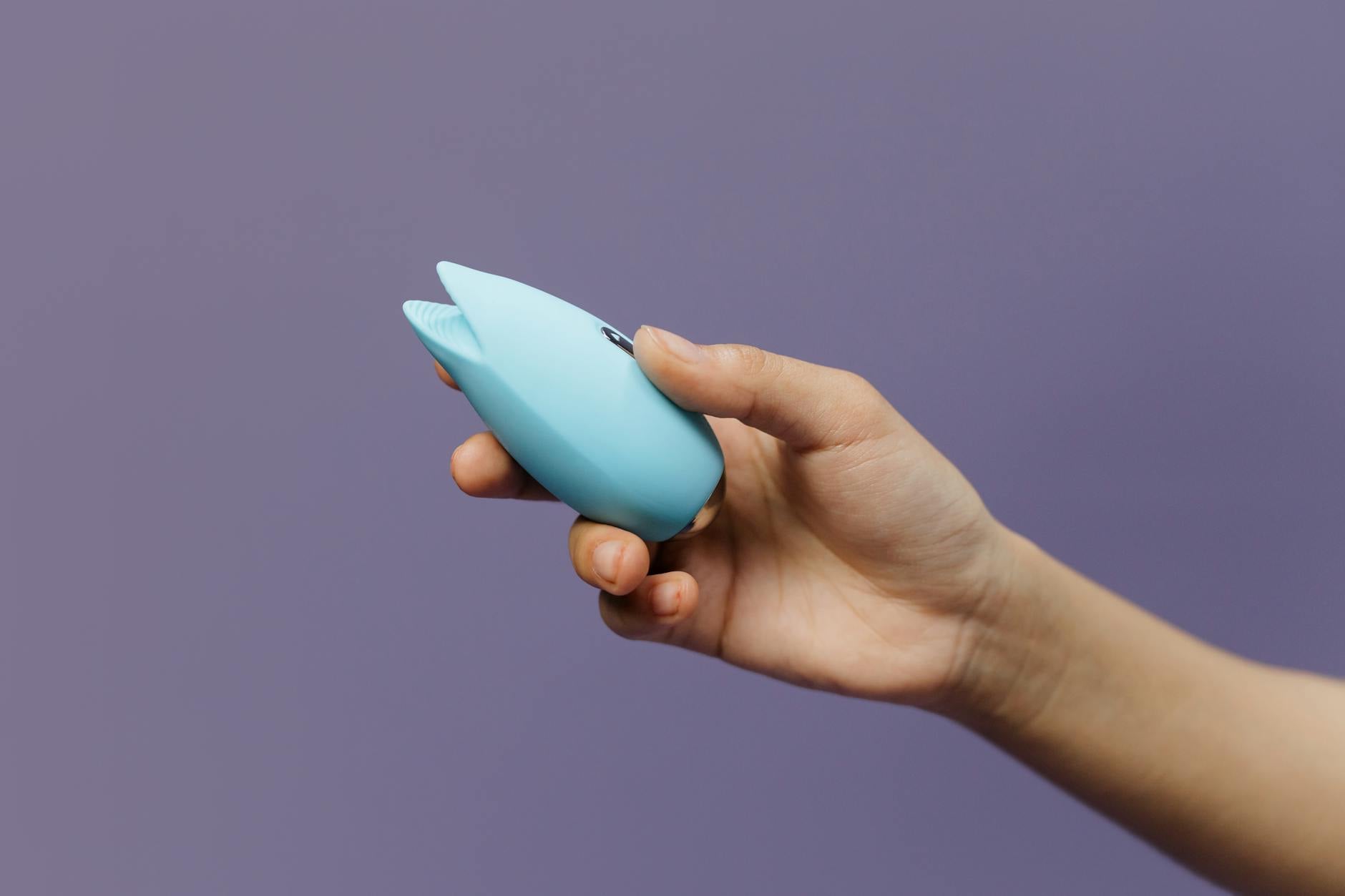
If you're choosing a clitoral vibrator to introduce in a new relationship, the lemon vibrator has a specific advantage. The suction mechanism feels completely different from a traditional vibrator. It's not buzzy. It doesn't numb out. It creates a rhythmic, almost alive sensation that many people describe as more intimate, not less.
That matters in the context of a new relationship because it doesn't feel like you're bringing in a replacement. It feels like you're adding a dimension. You're both exploring something together that neither of you has fully experienced. That's bonding.
Managing expectations around orgasm timing
One last thing. If you've been using a clitoral vibrator solo for a while, you know the pattern of your pleasure. You know how long it takes. You know the pressure and rhythm that works. When you introduce that to partnered sex, manage the timeline. Don't expect him to replicate the exact pressure of a lemon vibrator with his fingers. That's not replicating him. That's just biomechanics.
A healthier frame: "This usually takes me about this long. I might take longer or shorter with you because my brain is doing something different." You're factoring in arousal, connection, newness, and the fact that partnered pleasure is not solo pleasure. They're different nervous systems.
If you actually DO finish faster or more intensely with him when the toy is involved, show that. Let him feel that. That's the real win, and it tells him he's not being replaced. He's being included in something that actually works.
When to bring up solo use
This is separate from partnered use, and it deserves its own conversation. Some partners are fine with toys in bed together but feel weird about you using one alone. That's a boundary worth understanding.
You might frame it like this: "Using this solo helps me understand my body better, which actually makes me better at knowing what I want when we're together." Self-knowledge is good for both of you.
Or, if you need solo pleasure for stress relief or sleep, you can name that too. "I use this sometimes to wind down, kind of like you use a run." It demystifies it. It makes it a normal thing, not a secret or a substitute.
The relationship-building part
Here's what I've seen in couples who navigate this well. They tend to have better communication overall. Because talking about one thing you need, and having that be received well, makes it easier to talk about other things. Your partner learns that bringing your needs to the table is something you do. That you're not resentful. That you're collaborative.
And they learn that being with you means sometimes updating their understanding of sex, pleasure, and intimacy. That's actually a gift. Most people go through their whole lives without that kind of feedback. Having a partner willing to say, "Here's what I need, here's what actually works for me," and then being willing to try it. That's a strong foundation.
The lemon vibrator is just the visible part. What you're actually introducing is honesty.
FAQ
What if they think I'm trying to replace them?
Say it directly: "I want you AND this. They're not the same thing. I want both because they both feel good to me for different reasons." Then show them. Let your body tell the story. Pleasure is the best argument.
Should I use it every time we have sex?
No. Mix it up. Sometimes just you two. Sometimes with the toy. That variety actually reinforces that the toy is one option, not the only way. It keeps both experiences fresh.
What if he wants to control it and I don't like how he uses it?
Teach him. "A little lighter here" or "That rhythm is perfect." You're not criticizing him. You're directing your own pleasure. That's attractive to most secure people.
Is it weird to introduce a toy if we haven't been dating that long?
Not if you frame it as self-knowledge, not as a complaint. "I know what works for my body" is confident, not demanding. It actually builds trust faster than pretending pleasure doesn't matter to you.
Should I tell him I've used it solo before partnered use?
Yes, eventually. Not as a confession. Just factually. "I've had this for a while and use it solo. I thought it might be fun to explore together too." Honesty beats mystery here.
What if he has never seen a clitoral vibrator before?
Show him. Let him hold it. Explain what it does. Make it educational and casual. Most people are curious once the initial surprise wears off. Knowledge kills anxiety.