
The gap nobody talks about
You're ready. They're not. And in that five, ten, sometimes fifteen minute window while they catch up, something quietly breaks. You're lying there, body warm and alert, waiting for them to join you. They're trying. You can feel the effort. But the longer it takes, the more your own arousal starts to flatten, replaced by something that looks like patience but feels more like frustration.
This is the arousal gap, and it's wildly more common than couples admit. Here's what makes it tricky: it's not a problem with desire. Both of you want sex. But your nervous systems have different timelines, and pretending they're the same creates tension that spreads far beyond the bedroom.
Why arousal timing matters more than arousal itself
Let's start with the physiology. Arousal isn't a single switch. It's a cascade of things. Heart rate goes up. Blood flow shifts. The vagina lubricated. The clitoris swells. For some bodies, this happens in three minutes. For others, it takes twenty. Stress, medication, hormones, attention, and how much you've been touched that day all change the timeline.
Neither timeline is wrong. But when you're waiting for your partner to catch up, two things happen at once. First, you start second-guessing whether they actually want you. Second, you begin to override your own pleasure in service of theirs. Both of those are genuinely toxic to intimacy.
A lemon clitoral vibrator solves this in a specific way. It doesn't replace your partner's touch. It gives you something to do while you're waiting that keeps your own arousal climbing instead of flatting out.
The conversation that has to happen first
Before you bring a lemon vibrator or any toy into this dynamic, you need one direct conversation with your partner. Not during sex. Not in the middle of trying. Sometime neutral.
The script: "Sometimes you take longer to warm up than I do, and sometimes I take longer than you. That's totally normal. But when I'm ready and you're still building, I start to feel disconnected, and I think that shows up in how I touch you. I want to use a vibrator during those moments so I stay in my own pleasure while you're building yours. This is about us staying connected better, not about replacing anything."
The reason this matters is that some partners hear "vibrator" and translate it as "you're not enough." You're not saying that. But if you don't name it directly, they'll assume it anyway. Get ahead of it.
How to actually use a lemon vibrator for this specific gap
Start before you're fully ready. This sounds counterintuitive, but the goal is for you to be climbing while they're building, not for you to be at the peak while they're at the baseline.
Maybe they start touching you. You can feel it's going slower than usual. Instead of waiting five minutes to see if the pace picks up, you reach for your lemon vibrator at minute two. Start at pattern one or two. Nothing aggressive. You're not trying to get off. You're trying to stay warm and connected.
Then here's the part that changes everything: you stay engaged with them. Eye contact. Kissing. Touching their body with your other hand. Your pleasure isn't something you're doing to them or away from them. You're doing it alongside them. They're catching up. You're not speeding ahead so far they can't follow.
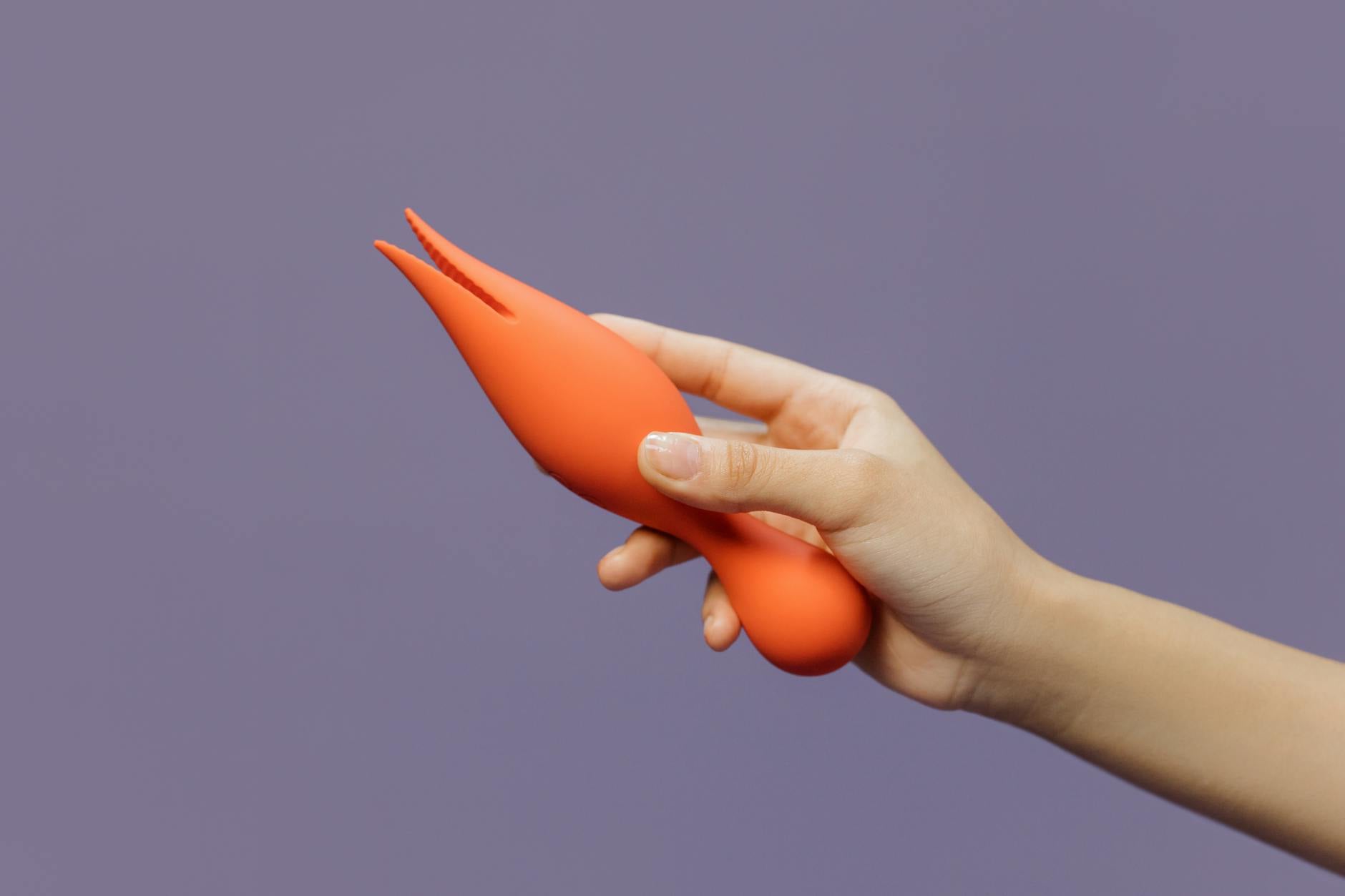
Photo by cottonbro studio on Pexels
The intensity question
Most people using a clitoral vibrator in partnership keep it lower than they would solo. Pattern three or four instead of six or seven. The reason is sensation management. If you're at maximum intensity and they're still warming up, the gap feels wider, not narrower.
There's also a practical thing: lower intensity is quieter. It's less visually dominant. They can still be your primary focus. The vibrator is an auxiliary tool, not the main event.
If your partner seems distant or withdrawn, dial it back further. Sometimes the vibrator's presence reads as pressure even when you don't intend it that way. Subtle is better.
When to put it down
The moment they match your energy, most people stop using the vibrator. Not because you have to. But because the whole point is that you two are building at similar speeds now. The vibrator did its job. It kept you tethered to your own pleasure while waiting for them.
Sometimes, though, you'll both be ready at the same time and you'll want to keep using it because it feels amazing. That's fine too. There's no rule that says you switch to partner touch once they're ready. If you want to keep using it while they touch you elsewhere, that's your call.
The emotional part (which is actually the bigger part)
The arousal gap often sits on top of a deeper thing: resentment. You've waited. They've felt rushed. Over time, this creates this weird dynamic where sex becomes a project to manage instead of something you both want.
Using a lemon clitoral vibrator in this moment is partly practical. But it's also emotional. It's you saying: "I'm not going to abandon my pleasure while I wait for yours." That's not selfish. That's actually what keeps couples connected long-term.
The alternative is you shutting down your arousal, waiting, and then when you finally sync up, there's no energy left. Or you stay resentful that they take longer. A vibrator gives you a third option: you stay present and warm and interested in your own body while they catch up. That's actually the hottest thing for most partners to witness.
What if they feel threatened by the vibrator?
If your partner reacts badly to this, that's information. It might mean they have some insecurity about their ability to turn you on. It might mean they've been told their arousal is a problem their whole life and they're sensitive to anything that feels like you're "helping" them along.
Neither of these is something a vibrator fixes. Those are couple conversations. But here's what I've seen work: some partners feel less threatened if they're the ones to suggest the vibrator. Or if they suggest when you use it. Or if they hold it sometimes. There's no single answer.
The point is, this is a conversation about vulnerability and speed, not about tools.
Practical tips for the arousal gap specifically
One: warm-up time is not wasted time. If your partner needs twenty minutes to get fully aroused, that's not a deficit. But those twenty minutes don't have to feel like waiting. They can feel like building. A vibrator helps reframe it from "I'm waiting for you" to "we're both warming up."
Two: sometimes the arousal gap isn't about speed. It's about stimulation type. They might need a different kind of touch than what you're doing. Before assuming it's just timing, ask: "Do you need something different right now?" Maybe they need you to touch their chest, or their thighs, or maybe they need to be the one touching you. The vibrator doesn't replace this conversation.
Three: if the gap is consistent and feels like a pattern, it might be worth checking in about stress, medication, or whether they're actually engaged. Sometimes persistent arousal lag signals something deeper. Depression. Relationship disconnection. Side effects from something they're taking. A vibrator is a band-aid on those.
Why a lemon sucker specifically
Clitoral suction vibrators like a lemon vibrator work differently than traditional vibrators. They use gentle pulsing air pressure instead of buzzing. For people managing the arousal gap, that matters because suction tends to feel less pushy. You're not forcing your body toward orgasm. You're creating a gentle, building sensation that keeps you warm without the intensity that can feel isolating in a partnered moment.
The lemon's ergonomic shape is also intentional. You can use it with one hand and keep the other hand on your partner. You can shift easily from self-touch to them touching you while you're still using it.
The conversation to have after
Once this becomes a regular part of how you two sync up, check in. Ask them what it feels like to watch. Ask yourself what changed. For most couples, using a clitoral vibrator in this gap actually deepens things. It shifts the energy from "waiting" to "we're both here, building together."
Sometimes partners say it's actually really hot to watch you stay in your own pleasure. Sometimes they say it helps them relax knowing you're not checking out while they catch up. Sometimes it takes a few rounds before it feels natural.
Give it time. The arousal gap isn't something a vibrator erases. But it can transform it from a source of quiet resentment into something you're actively managing together.
People Also Ask
Is it normal for partners to have different arousal speeds?
Completely normal. Arousal timing varies based on nervous system sensitivity, hormones, stress, medication, and how distracted someone is. Two people in the same relationship might need vastly different warm-up times on different days. The myth that "good sex" means synchronized arousal is just that. A myth.
Will using a vibrator make my partner feel like they're not enough?
Possibly, but only if you don't talk about it first. Frame it explicitly: "I want to stay connected to my pleasure while you're catching up." Not: "I need this because you're slow." The difference is huge. One is about your body. One blames theirs.
Can I use a lemon vibrator while my partner is inside me?
Yes, if you both want to. Some people use external clitoral vibrators during penetration because it helps with arousal or orgasm. Others find it distracting or uncomfortable. It's a preference thing. If you're trying this, go slow, communicate constantly, and stop if it doesn't feel good.
What if my partner wants to use the vibrator on me instead of me using it solo?
That's a lovely option and sometimes it feels more connected. The risk is that you hand over control of your arousal again. But if they're using it while you're guiding them ("a little higher," "softer"), it can actually deepen things. Just make sure you're still steering your own pleasure.
How long should foreplay be if we have different arousal speeds?
As long as it needs to be. There's no magic number. The goal is for both of you to be ready at roughly the same time. If that's five minutes, great. If it's thirty, also great. The problem isn't the length. It's the impatience or resentment that builds when one person is waiting.
What if we're BOTH slow to warm up?
Then you might want to extend foreplay together, use toys together, or simply accept that you need more time and plan for it. The issue in this article is specifically about mismatched timing. If you match, the problem shifts.
The bottom line
The arousal gap isn't a flaw. It's just a fact of how different bodies work. A lemon clitoral vibrator doesn't fix the gap. It changes how you move through it. Instead of one of you waiting while the other catches up, you're both actively building. That shifts everything. Not just the mechanics of sex, but how you feel about each other in those moments before it really starts.
If you want to explore this more, we're here. Reach out anytime.