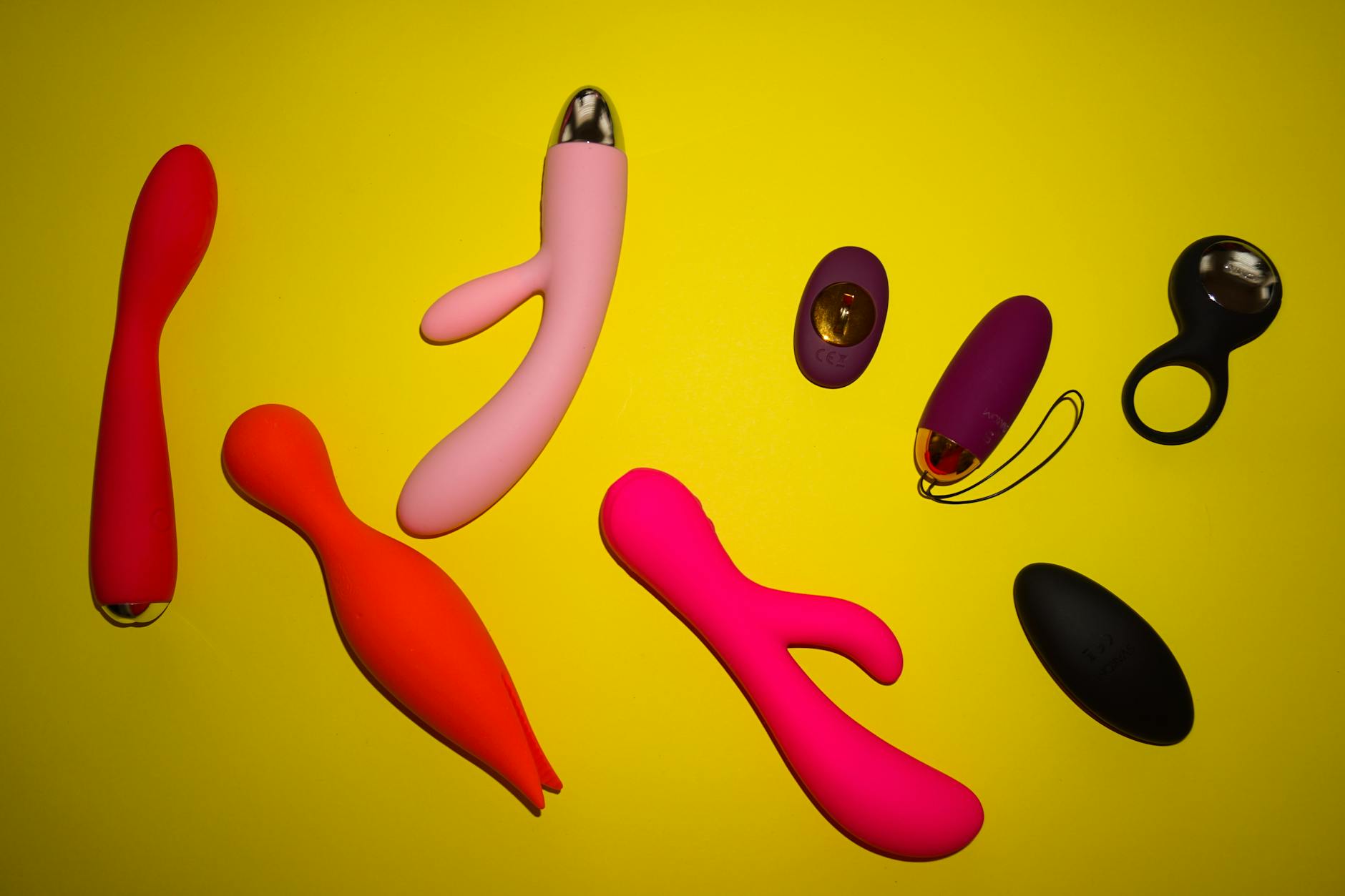
Let's name the thing nobody talks about enough
Pain during sex is common. It's also the thing most people suffer through in silence, assuming they're somehow broken or that it means the end of their pleasure life. Both of those thoughts are wrong. Pain is usually a signal, not a death sentence, and it's absolutely addressable.
What makes this tricky is that painful sex often arrives with shame attached to it. You might have had zero problems for years, and now something's shifted. Your brain wants to know what went wrong. Your body's trying to tell you something important. And most of the time, the two are talking over each other.
Here's what I know after working with hundreds of couples navigating this: the right tool, used the right way, can completely change the experience. A lemon clitoral vibrator—specifically one that uses suction instead of vibration—works differently when pain is in the picture. And understanding why matters as much as knowing how.
Why pain shows up and what it actually means
Pain during sex has a few main sources, and they're worth separating because each one needs a slightly different approach.
Insufficient arousal. This is the biggest one. When your body doesn't have enough time to warm up, the tissue doesn't fully relax, lubrication doesn't build, and the vaginal opening stays tighter than it can comfortably stretch. This isn't a desire problem—you might be fully in the mood mentally. It's a physical timing problem.
Tension in the pelvic floor. Anxiety, stress, past pain, or even just habit can make your pelvic floor stay partially clenched. It's like gripping your fist tight: the longer it stays that way, the more uncomfortable any stretch feels.
Tissue changes. Hormonal shifts, medications, inflammation, or even damage from rough sex previously can leave tissue thinner, drier, or more sensitive. This is real, it's addressable, and it's much more common than people admit.
Speed or pressure that doesn't match your body. Most conventional penetrative sex happens at a pace and pressure designed for the partner with a penis. Your body has its own timeline. When that timeline gets ignored, pain follows.
The thing all of these have in common: they're about arousal, not desire. You can absolutely want sex and still have a body that needs more time or a different kind of touch to be ready.
How a lemon vibrator changes the conversation
Here's where lemon sexual toys come in, and why they matter when pain is present.
A traditional vibrator, even on a low setting, is mechanical stimulation. It works by direct friction. When your tissue is already sensitive or your pelvic floor is already tense, that can feel sharp rather than pleasurable. You're adding intensity to a system that's already defensive.
A lemon clitoral vibrator—a suction-based device—works completely differently. Instead of vibration, it creates a gentle wave pattern of suction and release. That pattern doesn't require the same amount of tissue distension that friction does. It stimulates the nerve endings without the mechanical pressure that can trigger pain.
Think of it this way: a vibrator is like shaking a muscle that's already tight. A lemon sucker is like gently lengthening it. When your body's defensive, the second one usually wins.
There's also a psychological piece. Using a device that feels noticeably different from what caused pain in the past can help your brain reset its expectation. You're not reliving the experience. You're building a new one.
The setup that actually matters
If you're using a lemon clitoral vibrator when pain has been present, the environment changes everything.
Time is non-negotiable. Budget 20-30 minutes for arousal alone, before any penetration enters the picture. This isn't foreplay. It's separate. Your nervous system needs time to shift from defensive to receptive, and rushing that is the quickest way to bring pain back.
During this time, start your lemon vibrator on the lowest setting. Let your body remember what pleasure without pressure feels like. Many people find that their pain history makes them unconsciously brace. Your job is to gradually teach your body that touch here can be safe. That takes repetition.
Lubrication, always. Water-based lube, applied generously. Even if you're aroused and producing your own lubrication, add external lube anyway. It reduces any friction and gives your nervous system one fewer thing to brace against. This is not a failure. It's a choice that makes pleasure more accessible.
Communication that isn't about performance. Before you begin, agree with your partner that the session is about sensation and comfort, not about reaching a particular endpoint. This seems small, but it's huge. The moment you're thinking "we need to get to penetration," you've introduced a deadline. Your body feels that pressure and tightens.
If you're partnered, let them know: "I'm going to keep talking about what I feel, and nothing I say is about you." This protects both of you from the spiral where pain becomes shame becomes more pain.
How to actually use a lemon vibrator when pain is the context
Start external only. Don't move toward any internal stimulation until external stimulation feels fully pleasurable. Spend multiple sessions—or multiple minutes, at minimum—on clitoral stimulation alone. Use your lemon vibrator starting at the lowest intensity, and hold it at the entrance to the vagina rather than directly on the clitoris if direct touch feels too intense.
Explore the settings slowly. Most lemon adult toys have multiple intensity levels. Your job isn't to find the strongest one. It's to find the setting where pleasure registers without any edge of discomfort. That might be level 2 of 10. That's fine. That's perfect. Stay there until that setting reliably feels good.
Watch for anticipatory tension. Your pelvic floor will sometimes tighten in anticipation of pain, even if pain isn't actually happening. You might notice your shoulders rising, your jaw clenching, or your breathing getting shallow. If you feel any of those, pause. Breathe deliberately. Relax your pelvic floor on the exhale. Your nervous system is trying to protect you from a threat that isn't actually present right now. You're retraining it.
Introduce penetration only when external stimulation feels reliably good. And when you do, start with something smaller than what caused pain before. A finger. A small dildo. The lemon vibrator itself, held at the entrance without being inserted. You're rebuilding trust in your body's ability to stretch comfortably. That's a process, not a switch.
When pain means you need outside help
Honestly though? If pain is significant or has been happening for a while, talking to a pelvic floor physical therapist or a gynecologist trained in sexual medicine is not optional. I say this as a therapist who specializes in couples work: sometimes the issue isn't emotional or relational. Sometimes your tissue genuinely needs attention.
Conditions like vaginismus (involuntary pelvic floor tightness), vulvodynia (chronic vulvar pain), or genitourinary syndrome of menopause are real, common, and highly treatable. None of them are your fault. All of them respond to proper care.
A pelvic floor PT can teach you how to actually relax your pelvic floor, which is different from just thinking about it. A gynecologist can rule out infection, inflammation, or tissue changes that need treatment. Getting that clarity isn't giving up on pleasure. It's removing obstacles to it.
The relational piece (because pain is never just physical)
If you have a partner, pain during sex almost always becomes a relationship conversation, whether you plan it to or not. One person feels like they're causing harm. The other feels broken. Both people start avoiding sex entirely because it's become fraught.
This is fixable, but only if you separate the physical problem from the emotional one. "My body is responding to pain" is different from "I don't want you." "We need to go slower" is different from "there's something wrong with our connection."
The best thing you can do is make pleasure something you're exploring together, not something that one person is doing to the other. That reframes the whole dynamic. You're not trying to make penetrative sex work at all costs. You're discovering what works for both of you right now, knowing that "right now" might change.
Using a lemon clitoral vibrator together can actually help that conversation. It's a tool you're both learning. It's not something one person has to figure out alone. And honestly, that shared discovery often rebuilds intimacy faster than trying to force things back to how they used to be.
FAQ
Will a lemon vibrator make pain worse if I use it wrong?
Not typically, but the intensity matters. If you start on a high setting when your tissue is already tender, yes, that can amplify discomfort. Start at level 1 or 2 on any lemon clitoral vibrator. Let your body acclimatize. You can always turn it up later. You can't unknow what too much too fast feels like.
How long does it usually take before pain-free sex feels normal again?
That depends on what caused the pain and how long it's been happening. If it's recent and from insufficient arousal, you might see improvement in a few sessions of using a lemon sucker with longer warmup time. If it's been months or years, or if there's tissue damage, pelvic floor therapy might take weeks or a couple of months. The pattern matters more than the timeline: consistent, gentle, gradually expanding sensation almost always works.
Can I use a lemon clitoral vibrator if I'm already in pain right now?
Not during active pain, no. But you can use it during times when you're not in pain, to rebuild positive sensation. This is partly about retraining your nervous system. The more your brain associates your clitoris with pleasure without pressure, the more it will relax overall. This is background work, not a fix-it solution. But it matters.
Does my partner need to be involved in using a lemon vibrator for this?
No. Some people find it helpful to explore alone first, to understand what feels good without any performance pressure. Others want their partner involved from the start. Both are valid. If you do involve a partner, make sure the focus is on your sensation, not on them using it "correctly." You're the expert on your own body.
What if pain comes back even after things felt better?
Pain often comes back if you jump back to what you were doing before the pain started. It's a pattern reset, not a permanent fix. When pain returns, it's usually a signal to slow down again, add more lube, take more time with arousal, or get another assessment from your healthcare provider. It doesn't mean you failed.
Is it normal that I tense up even when using a lemon vibrator feels good?
Completely. Anticipatory tension is one of the most common things I see. Your nervous system has learned that this area is a threat zone. Even when sensation feels good in the moment, your body might still be bracing. Breathing work, pelvic floor physical therapy, and repeated experiences of safe sensation all help. Your body will gradually learn to relax, but it takes consistent, gentle repetition.
The part that actually matters most
Pain during sex is addressable. It's not a permanent feature of your sexuality, and it doesn't mean your body is broken. What it usually means is that something about how you're approaching sex right now doesn't match what your body needs in this season.
A lemon clitoral vibrator can absolutely be part of rebuilding pleasure when pain has been in the picture. But it works best as part of a bigger shift: more time, lower pressure, better communication, and sometimes professional support from someone trained in sexual medicine or pelvic floor therapy.
Your pleasure matters. Taking time to rebuild it properly isn't self-indulgent. It's necessary. If you're not sure where to start, we're here to help.