
Let's be real about imbalanced foreplay
Here's the thing: foreplay is supposed to be mutual. In theory, you both get warmed up, both get the attention you need, and then you move into the main event. In practice, though, it often becomes a performance that heavily favors one person's arousal timeline.
Maybe your partner gets most of the manual attention while you're expected to stay ready on the sidelines. Maybe the focus shifts to them so completely that your own arousal drops by the time anything happens with you. Maybe you've stopped asking for more because the conversation always lands awkwardly. This is messier than it sounds, because you probably still love them, and they probably think everything's fine.
A lemon clitoral vibrator like the Lem doesn't fix relationship communication. But it does something nearly as valuable: it gives you agency. It lets you take your own pleasure seriously without waiting for your partner to remember to, and it does it in a way that can actually deepen connection if you let it.
Why one-sided foreplay happens (and why it's fixable)
Three patterns show up repeatedly in this dynamic.
Pattern one: performance imbalance. One partner takes longer to arouse or needs more specific stimulation. The other partner gets good at generating that stimulation, and then the roles lock in place. No one consciously chose this; it just calcified over time. The faster-arousing partner stopped asking for their own warm-up because it felt selfish.
Pattern two: the rush. Foreplay gets compressed because work happened, kids need bedtime, or someone's tired. One person gets expedited attention (usually whatever generates the quickest arousal), and the other gets skipped. Efficiency beats equity.
Pattern three: learned helplessness. After months or years of asking for more attention during foreplay and getting distracted responses, you stop asking. It's easier to let it happen to you than to keep advocating for yourself and feeling the sting of being deprioritized.
The good news: all three are fixable. And a lemon vibrator is the practical entry point to fixing them.
How a lemon vibrator rebalances the dynamic
A lemon clitoral vibrator works because it does three things that manual foreplay often doesn't.
First, it removes the need for your partner's sustained attention. This isn't about pushing them away. It's about building pleasure on your own schedule instead of theirs. You can use a lemon vibrator while they're still getting warmed up. You can build your own arousal arc. You get to be the protagonist of your own pleasure, not an extra in theirs.
Second, it creates visible pleasure. Your partner can see the effect. They can see your response, your breathing shift, your body respond. This makes your pleasure concrete and real in a way that can sometimes get lost when everything's invisible.
Third, it's a conversation starter without being confrontational. Bringing a toy into foreplay is way less fraught than saying "you never warm me up enough." It's an object between you, not an accusation. Many people find it way easier to say "I want to try this" than "I need you to do better."
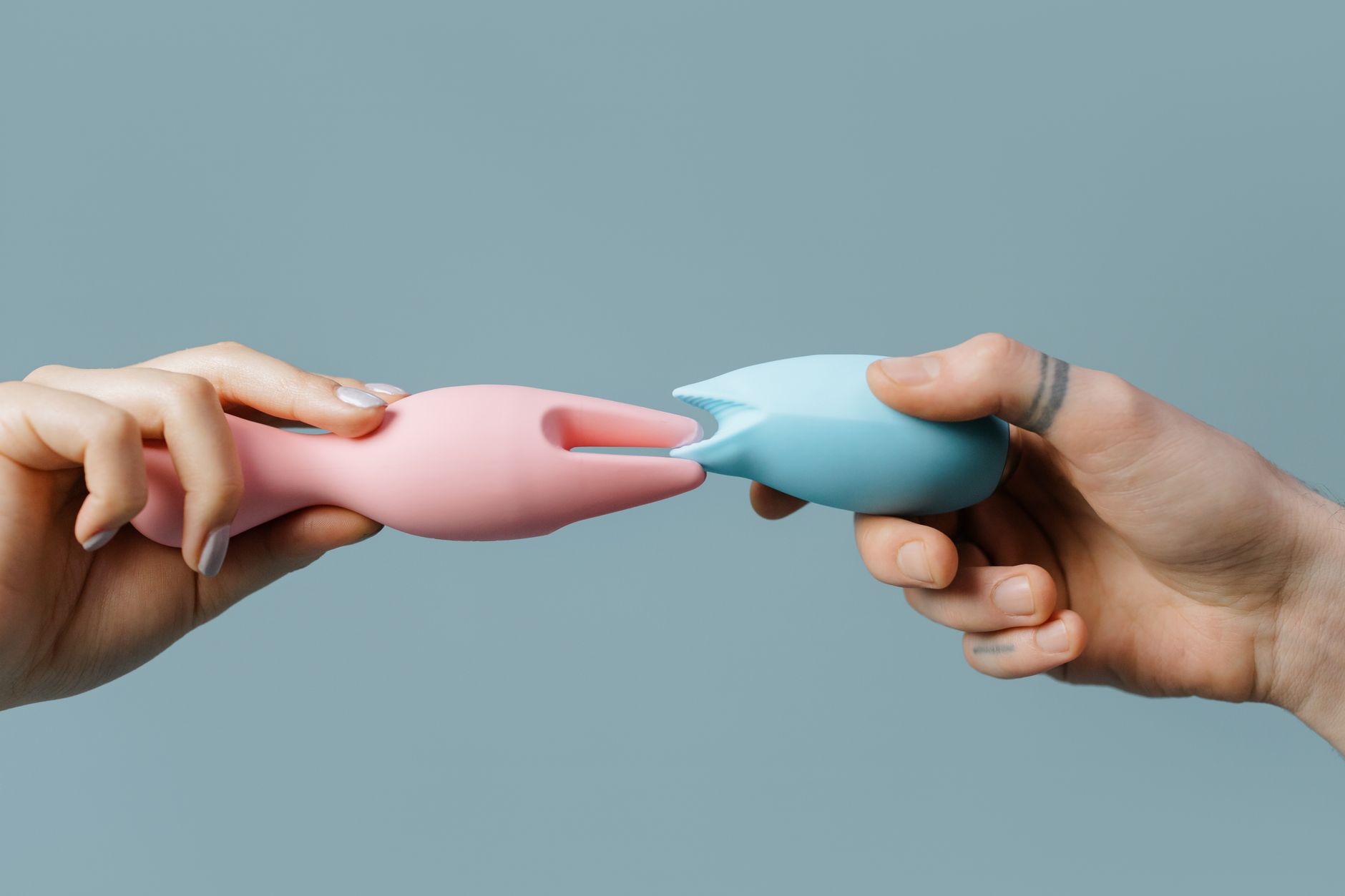 Photo by cottonbro studio on Pexels
The conversation you need to have first
Introducing a lemon vibrator into foreplay works best when there's been some setup. Not a big production. Just a real conversation.
Pick a time that's not in bed. Say something like: "I've been thinking about trying something new with foreplay. I want to bring in a toy that helps me get to where I need to be. I'd like for us to try it together." That's it. No blame. No criticism. Just a preference and an invitation.
If your partner gets defensive ("you don't enjoy what I do?"), stay grounded. "It's not about that. I enjoy a lot of things. This is something I want to add." You're not arguing. You're stating a boundary around your own pleasure.
If they seem interested, great. If they seem hesitant, name it: "What's making you uncomfortable?" Often it's insecurity ("am I not enough?"). That's a separate conversation from the toy itself, and it's worth having. But it's not your job to convince them. Your pleasure matters.
How to actually use a lemon clitoral vibrator during partnered foreplay
There are several ways this can go, depending on what works for you and your dynamic.
Option one: You use it while they warm up. You're touching them, kissing them, doing all the things. And you also have a lemon vibrator in the mix, building your own arousal at the same time. This works really well if your partner takes longer to get going. You're not waiting. You're building.
Option two: They use it on you. A lemon vibrator is incredibly easy for a partner to hold and control. You can guide them on intensity and placement. This keeps them involved in your pleasure without requiring the sustained, precise manual effort that sometimes leads to hand cramps or frustration. It's collaborative.
Option three: You trade. You use the toy on them while you're being touched. This creates real reciprocity. No one's just receiving or just giving. Everyone's engaged.
Option four: You use it for yourself while they penetrate. Some people find that a lemon clitoral vibrator during penetration deepens everything, especially if your partner has difficulty maintaining the angle or rhythm that gets you there. It's additive, not replacing.
Start with whatever feels least scary. Foreplay should feel good, not like you're staging a negotiation.
Intensity and rhythm matter more than you think
One reason lemon vibrators work so well in one-sided foreplay scenarios is the precision. You can start light. You can build slowly. You can stay exactly where feels good without waiting for your partner to "get there" with you.
If you've been rushed through foreplay for a long time, your body might not know how to build arousal when given actual time. That's normal. Don't push. Start on a lower setting (the Lem has multiple patterns and intensities) and let your body remember what it needs.
Many people find that patterns work better than straight vibration. The suction technology in lemon clitoral vibrators like the Lem creates a stimulation that feels more like a rhythm than a buzz. If you've only used traditional vibrators before, this might feel completely different. Give it time.
When your partner resists
Honestly, some partners will. They might feel threatened. They might think toys mean something about your attraction or satisfaction that usually isn't true. They might be embarrassed. They might just be used to foreplay being a certain way and resistant to change.
You can't force this. But you also don't have to accept one-sided foreplay as the permanent arrangement. If your partner refuses to engage with your pleasure, refuses to let you use tools that help you, refuses to have real conversations about what you need, that's information. That's a relationship problem that goes way deeper than foreplay.
If they're willing to try but nervous, approach it slowly. Maybe the first time they just watch while you use a lemon vibrator solo. Maybe the second time they hold it. You're building comfort and trust, not performing surgery.
The pleasure permission shift
Here's what I see happen most often: someone gets a lemon clitoral vibrator because foreplay feels one-sided, and yes, the foreplay improves. But the bigger thing that shifts is their own relationship with their pleasure.
You get to experience what foreplay feels like when it's not rushed. When it's not performing. When your arousal matters as much as theirs. When you're building toward something instead of being left behind. That changes your nervous system. That teaches your body that your pleasure deserves time and attention.
Even if nothing else changes in your relationship, you've changed something important inside. You've decided your orgasm is worth 15 minutes instead of an afterthought. That's not small.
FAQ: One-sided foreplay and lemon vibrators
Will using a lemon vibrator make my partner feel replaced?
Possibly, at first. But here's the truth: if your partner's threatened by you having your own pleasure, that's a problem with them, not the toy. A good partner gets excited that you're getting what you need. If they don't, that's information about whether they actually care about your satisfaction.
Can I use a lemon clitoral vibrator solo first to get comfortable?
Absolutely. In fact, I'd recommend it. Spend some time alone with a lemon vibrator, learn what you like, what intensities work, what patterns feel good. That knowledge makes partnered use way less awkward and way more confident.
How do I know if a lemon vibrator is right for my sensitivity?
If you're sensitive, start on the lowest setting. Lemon vibrators use suction rather than direct vibration, which tends to feel gentler for sensitive clitorises. But every body is different. That's why spending time solo first matters. You can find your baseline without performance pressure.
What if my partner wants to use the lemon vibrator on me but gets the pressure or angle wrong?
Guide them. "A little lighter" or "lower" or "faster." You're teaching them how to pleasure you. That's not criticism. That's intimacy. If they're defensive about feedback, that's the real issue to address in conversation.
Can I bring a lemon vibrator into foreplay if we've never talked about toys before?
Yes, but lead with the conversation first. Don't just surprise them. "Hey, I want to try this" is different from "look what I brought." The conversation doesn't have to be long, but it has to exist.
Does using a lemon vibrator mean my partner isn't satisfying me?
No. It means you're taking your pleasure seriously. It means you're not waiting for someone else to figure out what you need. Those are good things.
The invitation
One-sided foreplay feels lonely. You're right there with someone you care about, and you're still waiting. A lemon vibrator gives you permission to stop waiting. It gives you a concrete way to say "my pleasure matters too."
That shift, that simple decision to advocate for your own arousal, changes things. Maybe it changes your relationship. Maybe it just changes how you feel about yourself. Either way, it's worth trying.
If you want to explore this further, we're here to help. Get in touch with questions about which tool might work for you, or check out our buying guide for more on clitoral vibrators.