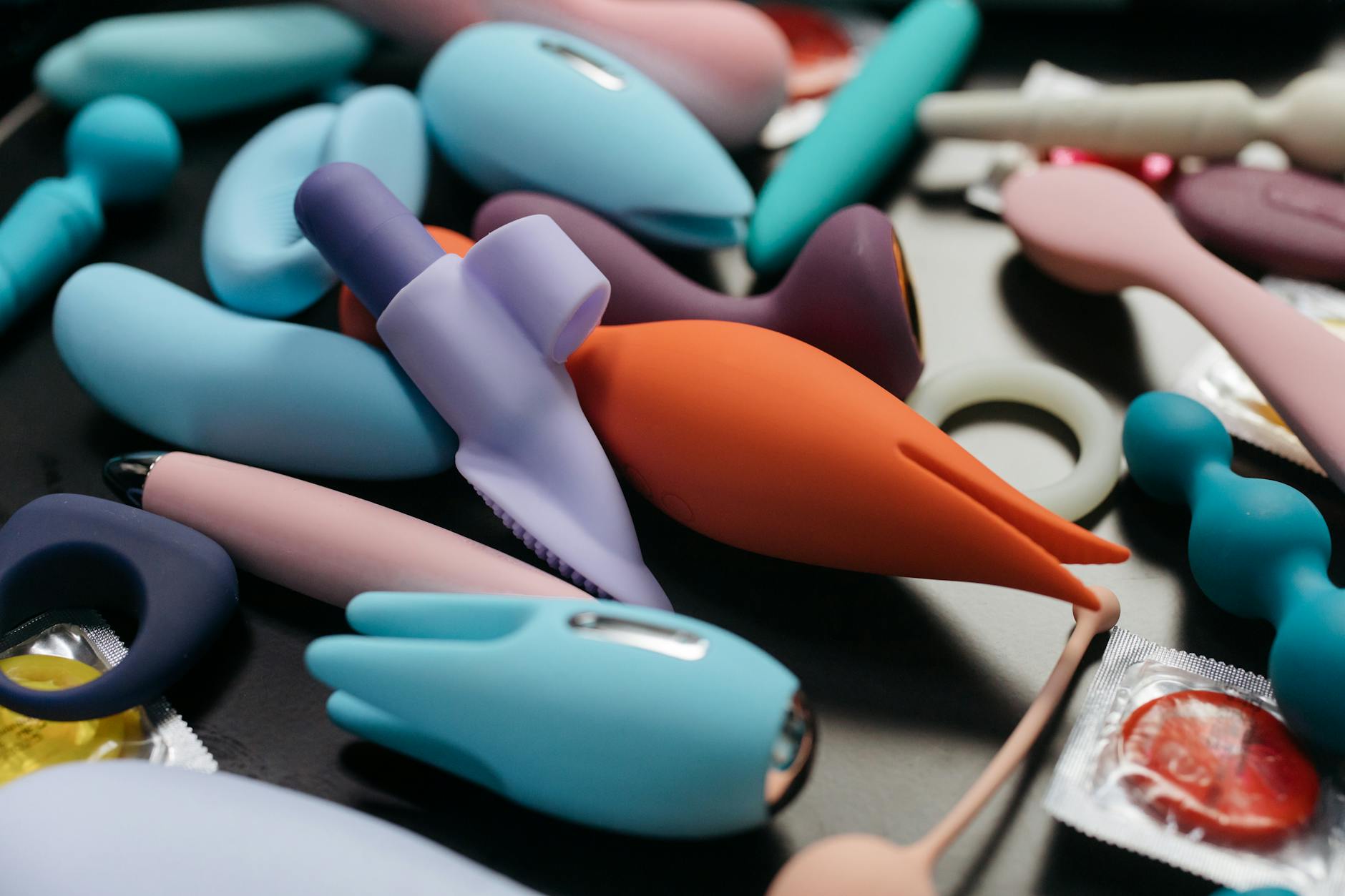
Let's be honest about the slow burn
Your body taking longer to warm up is not a malfunction. It's not a sign that something's wrong with you or that you're less interested in sex. Slower arousal is wildly common, and it gets more common with age, stress, medication, or just the natural ebb and flow of desire. The problem isn't your body. The problem is that most people treat slow arousal like a bug to hide rather than a feature to work with.
Here's the thing: a lemon clitoral vibrator isn't magic. But the way it combines gentle, consistent stimulation with zero friction can actually cut your warm-up time in half. Not by forcing anything. By making arousal feel good earlier in the process.
Why arousal actually slows down
There are roughly five reasons your body might need more time to get going. Understanding which one you're dealing with changes how you approach a lemon vibrator entirely.
First, there's stress and distraction. Your brain is genuinely the largest sex organ you own, and if it's spinning with work emails or a grocery list, your body won't cooperate. That's not laziness. That's biology.
Second, medication side effects are real. Antidepressants, blood pressure meds, and birth control can all blunt arousal. A lemon clitoral vibrator actually helps here because the stimulation is direct enough to trigger a response even when sensation feels muted.
Third, hormonal shifts matter. Whether you're cycling through your menstrual phases, dealing with thyroid issues, or moving through perimenopause, fluctuating hormones genuinely do slow down your initial response time.
Fourth, age and natural changes. After 30 or 40, many people need 20 to 30 minutes of foreplay before arousal builds to orgasm. That's completely normal. It's just longer than the five-minute-sprint model you might've grown up with.
Lastly, it could be relationship dynamics. If you're stuck in a pattern where sex feels rushed or obligatory, your nervous system literally won't engage. That requires conversation, not a toy. But once you've addressed the relationship part, a toy like the Lem can help rebuild sensation that's gone quiet.
The timing that actually works
Here's what I recommend to almost every person dealing with slow arousal: budget 30 to 40 minutes instead of pretending you can get there in 10.
Start with nothing. Spend the first 5 to 10 minutes on whatever typically feels good to you. Touch, kissing, dirty talk, a particular kind of foreplay with your partner. Let your nervous system start to shift out of its regular groove. This is not the time to introduce the lemon vibrator yet.
Then, around minute 10 to 12, introduce the lemon vibrator at the lowest setting. The point here is not orgasm. The point is sensation. You're training your body that pleasure is building. Setting one on a lemon clitoral vibrator is intentionally subtle. It's enough to register. It's not overwhelming.
Stay there for 5 to 10 minutes. This is where people usually get impatient. Don't. Your arousal is literally waking up. You might not feel dramatically different, but your body is responding. Blood is moving to the right places. Your clitoris is beginning to swell. These changes are happening even if they feel slow.
After you've been at setting one for a bit, move to setting two if you want. Or stay at one. The speed at which you escalate depends entirely on what feels right that day. Some days you'll want to cruise through all the settings. Other days, staying at one or two feels perfect.
The reason this matters: you're using the lemon vibrator as a tool to engage your arousal, not to force it. There's a huge difference.
How a lemon vibrator is different when arousal is slow
You might already know this, but the reason a lemon clitoral vibrator works differently than a traditional vibrator is the suction action. Instead of buzzing against tissue, it gently draws the clitoris into a chamber and releases, creating a cycle of stimulation that feels less like friction and more like a massage.
When arousal is already slow, this matters. A traditional vibrator often needs you to be somewhat already turned on before it feels good. The suction-based approach of the Lem works the opposite way. It can actually help create arousal from a lower baseline.
Second, the sensation profile is different. With a traditional vibrator, the speed of the vibration is the main event. You feel it most intensely where the toy meets your skin. With a lemon sucker like the Lem, you feel the suction pulling through deeper tissue. This can trigger arousal responses in people whose surface sensation feels numb or delayed.
Third, the mental experience is less effortful. Because the Lem does the work for you, you don't have to be strategic about angle or pressure. You can relax into it. For people dealing with slow arousal, that mental release actually helps. You're not performing. You're just receiving.
The pattern that helps most
If you're using a lemon clitoral vibrator solo and arousal is taking time, here's what typically works best. Start at setting one. Spend 10 to 15 minutes exploring what that feels like. Does it feel good on the clitoris directly, or does a slightly indirect approach work better? Does it feel better when your legs are pressed together, or spread? These questions matter because you're learning your own arousal map.
Once you've spent that time, if you want more intensity, move up. If setting one is perfect and you want to stay there, that's equally valid. The goal is not to rush to the highest setting. The goal is to build genuine arousal, and that's different for every person every day.
If you're with a partner, the dynamic shifts slightly. A lemon vibrator works beautifully during foreplay. Your partner can hold the Lem while they're kissing you, touching you elsewhere, or talking to you. This distributes the sensory input across your whole body instead of concentrating it all in one place. Many people find this actually speeds up arousal because your nervous system is getting multiple signals at once.
The other piece: if arousal is slow, communication with your partner matters more than the toy. Tell them you need more time. Tell them that slow doesn't mean uninterested. Tell them what feels good right now. A lemon vibrator can facilitate that conversation. But the conversation itself is the actual tool.
When to stop trying and start noticing
There's a moment where you stop forcing arousal and start actually feeling it. You'll know it when you get there. Your breathing changes. Your skin feels more sensitive. The sensation from the lemon vibrator shifts from interesting to genuinely good.
If you're 25 minutes in and that hasn't happened, stop. Try again another day. Pushing through without arousal building is how people end up disconnected from sex instead of reconnected to it. Slow arousal sometimes means you need more foreplay. Sometimes it means that day isn't the day. Both are fine.
FAQ: Slow arousal and lemon vibrators
Will a lemon vibrator actually speed up my arousal if it's naturally slow?
Yes, often it will. The suction action and gentle approach can engage arousal from a lower baseline than traditional vibration does. But the speed depends on what's causing the slowness. If it's stress, removing the stressor helps more than any toy. If it's medication, a toy helps but won't completely override the effect. If it's relational, addressing the relationship matters more than the toy. The vibrator works best alongside other changes, not instead of them.
How long should I actually spend warming up?
20 to 30 minutes is realistic for many people. If that sounds like forever, remember that this includes all foreplay, not just vibrator time. A lemon vibrator typically comes in around 10 to 15 minutes of that total. The rest is touch, kissing, mental connection, whatever else is part of your arousal.
Is slow arousal a sign my relationship is failing?
Not necessarily. Slow arousal can absolutely be a sign that you need more emotional connection or foreplay with your partner. But it can also be completely separate from relationship health. Stress, medication, hormones, age, and sleep all affect arousal independently. If your relationship feels otherwise solid, slow arousal is usually a technique problem, not a relationship problem.
Should I always use my lemon vibrator at the lowest setting when arousal is slow?
No. Start there to learn the sensations. But if you quickly find that setting two or three feels better, use that. The idea is to use whatever setting actually engages your arousal, not to stay at the lowest setting out of principle. Slow doesn't mean gentle. Sometimes slow arousal needs more intensity, not less.
Can slow arousal ever actually feel better than fast arousal?
Yes. Many people find that once they stop fighting slow arousal and start leaning into it, the experience is richer. You're not racing to the finish. You're building something over time. The sensations feel stronger because you're more aware of them. The eventual orgasm often feels deeper. Slow isn't worse. It's just different.
What if my partner thinks slow arousal means I'm not attracted to them?
That's a conversation to have directly. Slow arousal is not about attraction. It's about physiology. If your partner feels insecure about it, reassure them. If you want, involve them in using your lemon vibrator together. Watching how the vibrator engages your body can actually help them understand that it's not about them. It's about how your specific body wakes up.
The thing nobody tells you about slow arousal
Most of the time, slow arousal feels like a problem because we've been taught that fast is the standard. Fast arousal, fast orgasm, done. But if your body needs 25 minutes instead of 5, that's not a bug. That's information.
A lemon clitoral vibrator isn't going to transform you into someone who feels arousal in 90 seconds. But it can help you enjoy the slower process you're already experiencing. And honestly, once you stop fighting it and start working with it, slow arousal often becomes the best kind.