You have a partner. You also want to use a lemon vibrator alone sometimes. And you're wondering if that's a problem. Here's what I've seen in 20 years of couples therapy: it's not. What matters is how you frame it.
Solo pleasure in a relationship isn't infidelity, neglect, or a sign the relationship is broken. It's a form of self-care and self-knowledge that, when approached with honesty, can actually deepen intimacy. The trick is understanding why you want it, knowing how to use your time alone with a clitoral vibrator, and having a conversation with your partner that doesn't accidentally trigger fear.
The reasons are straightforward and none of them are about avoiding your partner:
Pleasure on your own timeline. With a partner, sex often involves negotiation, timing, and arousal synchronization. Alone, you set the pace. You don't have to worry about whether they're tired, distracted, or ready. A lemon clitoral vibrator lets you have exactly the kind of session you want, whenever you want it.
Discovering what actually works for you. Many people (especially women) don't know their own bodies well before a relationship. Solo time with a vibrator helps you map your own preferences without the cognitive load of a partner's pleasure. Then you bring that knowledge back to shared intimacy.
Release without negotiation. Sometimes you need to orgasm and you don't need the other stuff. A quick solo session with a lemon vibrator takes 10 minutes. A full intimate encounter takes longer and involves more emotional presence. Both are valid.
Anxiety management. Solo pleasure is one of the most effective ways to regulate your nervous system. If you're stressed, hormonal, or overwhelmed, a session alone with a lemon sucker can reset your body chemistry in a way nothing else does.
None of this means your partner isn't enough. It means you're enough for yourself.
Let's skip the obvious part (you know where it goes). Here's what actually matters:
Time and space matter. Set aside at least 15 to 20 minutes. Rushing through it defeats the purpose. Lock the door, silence your phone, and give yourself permission to be present. This isn't self-indulgence. It's medicine.
Start low and slow. Many people jump straight to their favorite pattern. Instead, begin on pattern one or two and let your arousal build. This gives your clitoris time to respond, reduces overstimulation, and often leads to more intense sensation overall. The Lem is designed for this kind of layered approach.
Use lubricant every time. Even when you're alone. Water-based lube isn't just for comfort. It reduces friction on tissue, lets the suction work more effectively, and signals to your body that this is a full sensory experience, not a quick fix.
Pay attention. Notice what patterns feel good, what speeds work, where you like the vibrator positioned. This is data. Write it down if that helps. You're building a map of your own pleasure that will become incredibly useful when you share it with your partner.
This is where most people get stuck. Here's how to do it without accidentally triggering defensiveness or shame:
Separate solo pleasure from partnered pleasure. Say it out loud: "These are different things with different purposes. This isn't instead of us." Your partner may have been taught that your pleasure should always be their responsibility. Untangle that assumption gently.
Be specific about why. Don't say "I need alone time." Say something like: "I want to understand my body better so I can enjoy our time together more." Or: "I need a fast way to reset when I'm stressed, and this helps me." Context removes mystery.
Invite them into the understanding, not the act. You don't need to hide it, but you also don't need detailed play-by-play. Something like: "I'm going to use my lemon vibrator this afternoon for about 20 minutes. It helps me feel clearer." Matter-of-fact, not defensive.
Address the elephant. Some partners worry solo pleasure means the relationship isn't satisfying. Say it directly: "I love our sex life. This is separate. It's about me knowing myself." Then mean it.
Offer reassurance without apologizing. You don't need to be sorry for your own pleasure. But you can acknowledge their concern. "I know this might feel new or strange. I'm happy to talk through any worries." Then listen.
If your partner responds with jealousy, shame-throwing, or ultimatums, that's worth exploring in deeper couple's work. Solo pleasure is a normal, healthy part of being a person. A partner who can't accept that is showing you something important about the relationship's flexibility.
1. They surprise you. Many partners, once they understand it's not about them, become curious or even supportive. Some want to understand what you like so they can do it during partnered sex. Some ask to be in the room (which is a different thing and totally fine if you both want it).
2. They ask for the same space. If you've created permission for solo pleasure, they may want it too. That's healthy. You're modeling self-care.
3. Your intimacy changes, usually for the better. When both people in a relationship know their own bodies and aren't ashamed of it, partnered sex gets better. You're less dependent on your partner for all your pleasure. You're more present instead of resentful. You can ask for what you actually want because you know what that is.
Honestly though, this doesn't need to be one conversation and done. People's needs shift. Check in every few months, especially if something feels off. "Is this still working for you?" Open the door for them to say if they're struggling. And if you're using a lemon vibrator solo because your relationship is actually breaking down, that's different. How to use a lemon vibrator with your partner without it getting weird addresses the shared-pleasure angle, but solo pleasure won't fix a deeper problem.
How often is too often to use a lemon vibrator alone? There's no magic number. If it's replacing partnered intimacy and your partner is frustrated, that's worth addressing. If you're doing it a few times a week and both of you are satisfied, it's fine. The question is: is it adding to your life or replacing something important?
Will my partner feel threatened if I use a clitoral vibrator solo? Possibly, especially if they've been taught that your pleasure is their job. But a threatened feeling isn't a reason to hide your body. It's a reason to talk about where that fear comes from. Many partners relax once they realize solo pleasure isn't about them.
Should I hide my lemon vibrator? Not if you want to build trust. Hiding it creates the impression you're doing something wrong. Keeping it visible or at least not secret normalizes it. That said, privacy is different from secrecy. Having a locked drawer where your toys live is reasonable.
What if my partner wants to join my solo time? That's a conversation. Some people love it. Some find it changes the experience. You get to decide. "I appreciate the interest, but I need this time to be just mine" is a complete sentence.
Can solo pleasure hurt the relationship? Only if it's a symptom of deeper issues (resentment, shame, avoidance) or if it's genuinely replacing partnered intimacy. If you're using a lemon vibrator alone because you're angry or checked out, that's worth examining. If you're using it because you enjoy it and you're also present with your partner, it won't hurt anything.
Is it selfish to want time alone with a vibrator? No. Knowing yourself and tending to your own pleasure is one of the most generous things you can do for a relationship. You show up less resentful, less frustrated, more present.
Here's what I wish more people understood: a healthy relationship has room for both "us" and "me." Solo pleasure with a lemon vibrator, a toy from Hello Nancy, or anything else is an extension of knowing yourself. When you understand your own body, your own pleasure, your own rhythms, you bring all of that to your partnership.
Your partner benefits from your self-knowledge. You benefit from their respect for your autonomy. And the relationship benefits from two whole people choosing to be together, not two half-people desperate for completion.
Start the conversation. Use your vibrator without shame. And watch what happens when you stop hiding and start being honest.

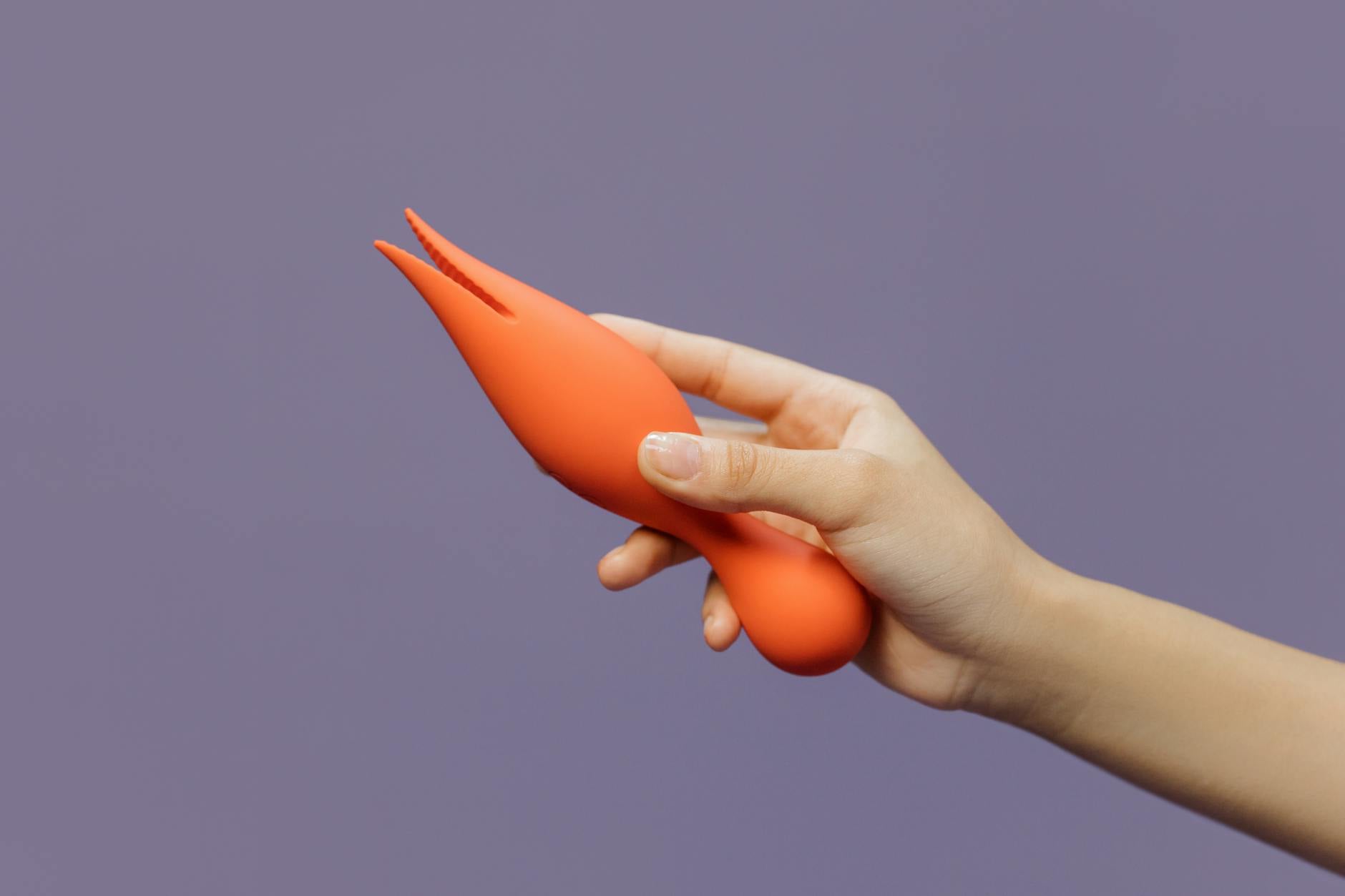 Photo by