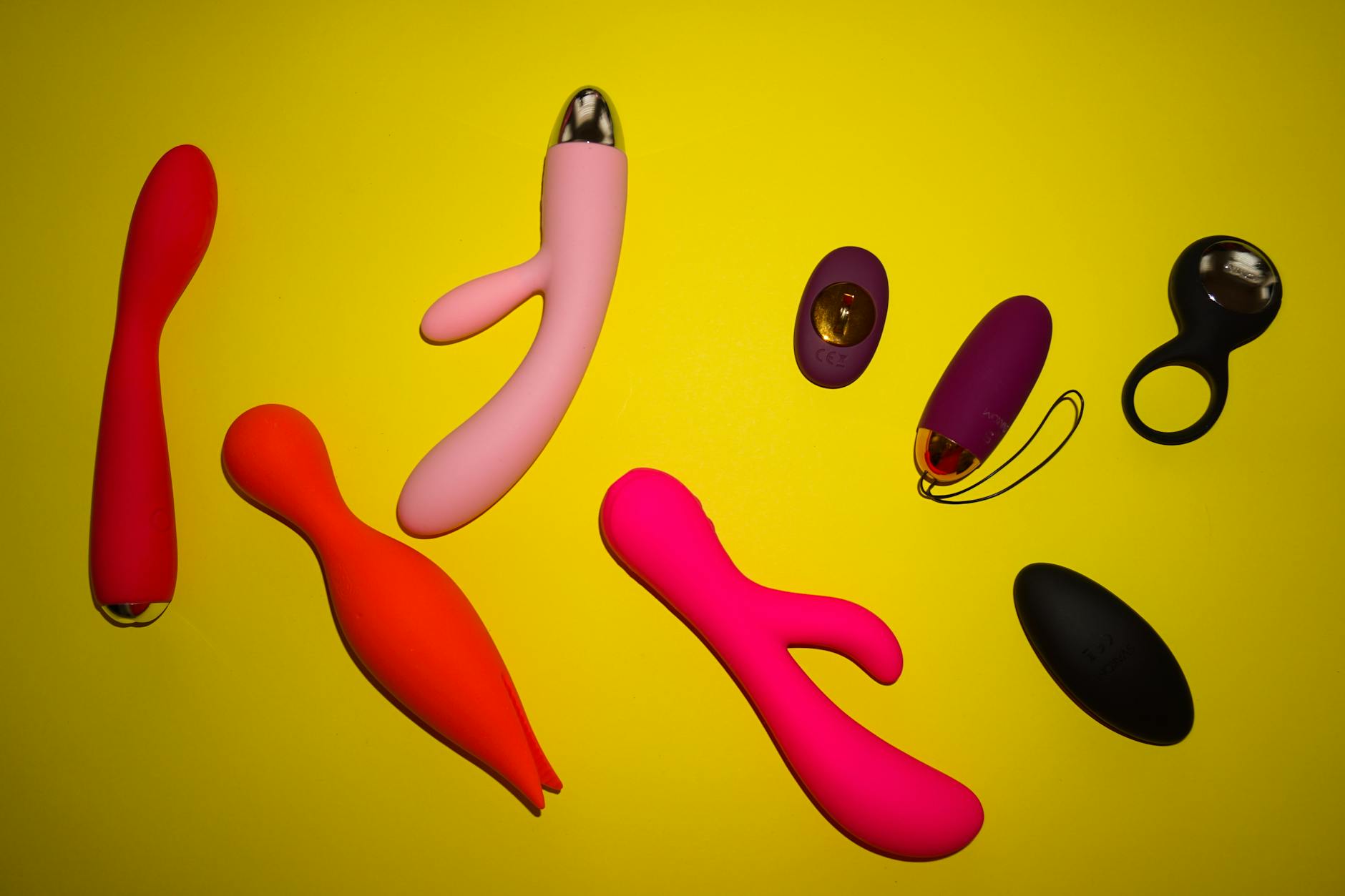
How to Use a Lemon Vibrator During Perimenopause When Hormones Shift
Here's what nobody tells you about perimenopause. It's not one experience. It's a cascading series of small shifts that rewire your arousal in ways that feel unpredictable, frustrating, and sometimes genuinely confusing.
One week you're hypersensitive. The next week, nothing lands. Your vulva feels different to you. Your clitoris responds on its own timeline. And if you were someone who relied on consistent arousal patterns, perimenopause breaks all those rules at once.
The good news? Lemon vibrators, specifically clitoral vibrators designed with suction or air-pulse technology, handle hormonal flux better than traditional vibrators. They work with the body's changing sensitivity rather than demanding the same response every cycle.
What perimenopause actually does to sensation
Let's separate the myth from the mechanism. Perimenopause doesn't kill your ability to feel pleasure. What it does is make that pleasure unpredictable.
Your estrogen levels don't drop steadily. They surge and crash. Some days your clitoris is flooded with blood and sensation. Other days it feels muted. Your vaginal tissue gets less lubrication, yes, but not uniformly. One area might feel dry while another stays supple. Your pelvic floor tightens irregularly as hormone levels swing.
This volatility is the actual problem, not menopause itself. You're not broken. You're cycling through versions of yourself in a compressed timeframe.
A lemon clitoral vibrator works here because it doesn't rely on intense vibration alone. Air-pulse technology (the hallmark of quality lemon vibrators) stimulates the external clitoris through gentle suction rather than rapid contact. This means less friction-dependent sensation and more nerve-activation focused stimulation. When your tissue is sensitive, it's gentler. When you're less responsive, the suction naturally engages more of the clitoral network.
Month-to-month patterns and what they mean
If you're in early perimenopause, pay attention to your cycle. Sensation typically peaks right before ovulation, when estrogen surges. That's when a lemon vibrator will feel most responsive.
Lustrual phase (the few days after your period ends)? Sensitivity climbs. This is often the easiest week to orgasm, and lemon vibrators can feel almost too intense. Start at a lower intensity setting.
Follicular phase (before ovulation)? Your body's building estrogen. Sensitivity ramps up gradually. This is a good phase to experiment with higher intensity settings.
Luteal phase (after ovulation)? Progesterone rises, estrogen dips. Arousal takes longer. Sensation feels flatter. Here's where patience matters. Budget more time for warm-up. Don't assume you're doing anything wrong.
Menses? Everything is more tender. Lemon vibrators can work beautifully here because air-pulse stimulation feels softer than traditional vibration. Many people with vulvas actually report easier orgasms during their period, despite the cultural discomfort around it.
Track this for two or three cycles. You'll spot your pattern. And once you know when you're most and least responsive, you can adjust your approach with your lemon vibrator accordingly.
Arousal timing shifts and why lemon vibrators adapt
One of the most common complaints I hear from people in perimenopause is this: "Foreplay used to work. Now it doesn't."
Arrousal used to build in 5-10 minutes. Now it's 15-25. Or sometimes 30. This isn't a sign of diminished desire. It's a sign that your nervous system is requiring more input before the parasympathetic (pleasure) response kicks in.
Traditional vibrators demand immediate response. You turn them on, they vibrate at one frequency, and your body either cooperates or it doesn't. Lemon vibrators, particularly clitoral suckers and air-pulse devices, work differently. They create sustained stimulation that builds gradually. There's no on-off switch in your nervous system. It's a ramp.
Here's the practical shift: when using a lemon vibrator during perimenopause, plan for a longer warm-up window. Start at the lowest intensity setting. Let it work for 3-5 minutes before increasing. Your clitoris needs time to engorge fully, and when your hormones are in flux, that process takes longer.
Also, don't confuse "slow to start" with "less interested." They're different things. Your desire might be exactly the same. Your arousal mechanism is just working on a different timeline.
Lubrication changes and how to work with them
Estrogen keeps tissue hydrated. When it fluctuates, so does natural lubrication.
You might notice: copious lubrication one week, dryness the next. Inconsistent lubrication (slick in some areas, dry in others). Lubrication that's thinner and less slippery than before.
None of this means your lemon vibrator won't work. It means you're adding a second tool to your setup.
Water-based lubricant becomes essential, not optional, during perimenopause. And I mean good, thoughtful lubricant. Not the cheap stuff from a gas station. Invest in a quality water-based lube designed for sensitive skin. Apply it generously before using your lemon clitoral vibrator.
Why water-based specifically? Silicone lube is richer and lasts longer, but it can degrade silicone toys over time (depending on the toy's material). Water-based lube is compatible with any toy, feels natural on sensitive tissue, and washes away cleanly.
Reapply as needed. If you're taking 25 minutes to warm up and orgasm, lubrication might dry slightly partway through. That's normal. Keep the lube nearby and add more.
Sensitivity swings and how to manage them
One of the strangest parts of perimenopause is this: your clitoris doesn't have a fixed sensitivity level anymore.
You might find that your usual settings on a lemon vibrator feel too intense some days and underwhelming others. This isn't the vibrator failing. It's your hormones shifting.
Here's what I recommend. Use the full range of your lemon vibrator's intensity settings. Don't default to "medium." Start at the lowest setting and work upward. On high-estrogen weeks, you might enjoy patterns 5-7. On low-estrogen weeks, patterns 1-3 feel perfect.
Also, vary the location of stimulation. When your clitoris feels extra sensitive, focus the vibrator on the clitoral hood (the skin covering the clitoris) rather than the sensitive glans directly. When you're less responsive, direct stimulation of the glans works better.
This isn't complicated once you practice it. But it does require attention and flexibility. The perimenopause years are an invitation to learn your body more intimately, not a sign that something's wrong.
Pelvic floor tension during hormonal flux
Progesterone (which rises in the luteal phase) affects muscle tension throughout your body. Your pelvic floor is no exception.
During high-progesterone phases, your pelvic floor naturally tightens slightly. This can make orgasm feel shallower or harder to reach. Some people experience this as a plateau: arousal climbs, but release doesn't follow smoothly.
If this happens when you're using your lemon vibrator, try consciously relaxing your pelvic floor. This sounds woo-ish, but it's mechanics. Tight muscles block the orgasmic response.
Before starting, take three deep breaths. Tense your pelvic floor deliberately (think Kegel squeeze) and then release completely. Let it stay released. Then begin with your lemon clitoral vibrator.
You can also switch positions or adjust angle. Sometimes shifting from lying on your back to side-lying or seated changes the pelvic floor engagement enough to unlock that release.
When to loop in a healthcare provider
Let's be clear: perimenopause arousal changes are normal. Unpredictable sensitivity is normal. Longer warm-up times are normal.
What's not normal? Pain with stimulation. Sudden loss of sensation in your clitoris or vulva. Vaginal dryness so severe that lubrication alone doesn't help. Arousal that's completely flatlined for months.
If any of these happen, see a menopause-trained gynecologist or sex-positive therapist. Genitourinary syndrome of menopause (GSM) is treatable. So is hormonal imbalance. You don't have to white-knuckle through years of muted sensation.
In the meantime, a lemon vibrator is one of the kindest tools for navigating perimenopause because it works with your body's fluctuations rather than against them.
Common questions about lemon vibrators and perimenopause
Does a clitoral vibrator make perimenopause worse?
No. But it can highlight changes you're already experiencing. If your sensitivity has shifted, you'll notice it using a lemon vibrator because the sensation is so precisely focused. That's actually useful information. You're not making anything worse. You're just paying attention.
Will my lemon vibrator feel different as my hormones change?
Yes, it will. And that's okay. The vibrator isn't changing. Your nervous system's response to it is. Track the weeks when each intensity setting feels best. You'll develop intuition about what your body needs week to week.
Is it normal for my lemon clitoral vibrator to feel too intense some weeks?
Completely normal. Hormonally, you're swinging between estrogen peaks and crashes. High-estrogen weeks = heightened sensitivity. Lower-estrogen weeks = less responsive. Neither is better. They're just different. Adjust your settings accordingly.
Can perimenopause orgasms be harder to reach with a vibrator?
Yes, they can. If arousal is taking longer, that's not a failure of the vibrator. It's your body asking for more time. Extend your warm-up. Use lubrication generously. Relax your pelvic floor intentionally. Patience is the real tool here.
Should I use my lemon vibrator differently when I'm menstruating?
Not necessarily, but you might want to. Some people find that their lemon vibrator feels gentler and more pleasant during their period because tissue is already tender. You might prefer lower intensity settings or shorter sessions. Listen to what your body is telling you.
If I'm skipping periods, does my lemon vibrator approach change?
Yes, slightly. If your periods are becoming irregular or stopping altogether, you lose that predictable monthly pattern. Instead, track your own arousal and sensitivity independent of your cycle. Notice over time whether certain times of year or certain stressors shift how you respond. You're moving from a hormone-driven pattern to a more individual baseline.
The bigger picture
Lemon vibrators were designed for a reason. The clitoral anatomy responds beautifully to suction and air-pulse stimulation because it works with the body's natural arousal mechanism rather than overriding it.
During perimenopause, when your body is in flux, that flexibility matters. You're not fighting the vibrator. The vibrator is adapting to you.
Your pleasure doesn't end when your hormones start shifting. It transforms. And a tool designed to work with your body, rather than against it, makes that transformation feel less like loss and more like discovery.
If you're navigating perimenopause and want a deeper conversation about pleasure, relationship dynamics, or how to talk to your partner about these shifts, reach out. That's what I'm here for.
People Also Ask
Is a lemon vibrator safe to use during perimenopause?
Completely safe. Clitoral vibrators, including lemon-shaped air-pulse toys, are designed for external use and won't interfere with hormonal fluctuations or any other aspects of perimenopause. The only precaution: if you experience pain or unusual symptoms when using any vibrator, check in with your doctor.
Can using a lemon vibrator help stabilize arousal during hormonal changes?
Not in the sense of "fixing" the hormonal fluctuation itself. But it can help you navigate the changes more smoothly because air-pulse stimulation is gentler and more adaptive than traditional vibration. It works well whether you're in a high-sensitivity or low-sensitivity phase.
Do lemon vibrators feel different at different times in perimenopause?
Yes. Your perception of sensation changes as your hormones fluctuate. The vibrator itself stays the same, but how it feels to you will vary week to week. That's why tracking your response over a few cycles is useful.
Should I use a different toy if sensitivity becomes too high during perimenopause?
Not necessarily. Instead, drop to the lowest intensity settings on your lemon vibrator or use it through the clitoral hood rather than directly on the glans. Sometimes a positional shift or longer warm-up is all you need.
How do I know if my perimenopause arousal changes are normal or a sign of a bigger problem?
Normal: varying arousal week to week, longer warm-up times, needing more lubrication. Not normal: complete loss of sensation, pain with stimulation, arousal flatlined for months, or changes that feel emotionally distressing. If the latter, talk to a menopause-trained provider or therapist.